
Phishing and Identity Theft: What You Need to Know and How to Stay Alert
Worried about phishing and identity theft? Discover warning signs and simple steps to protect your financial information.
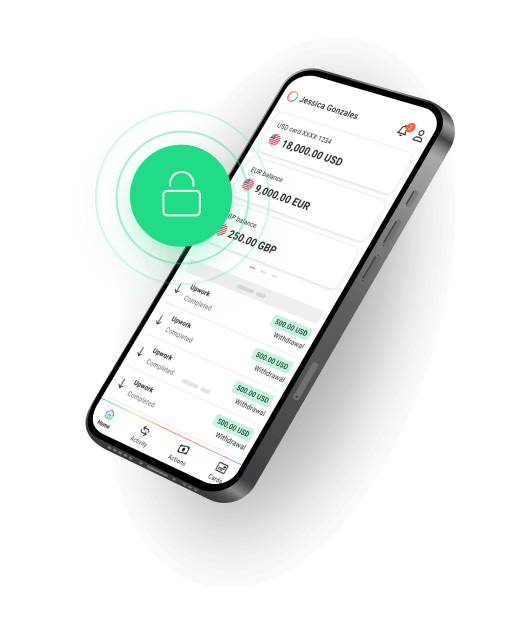

“Phishing” is when someone tries to contact you pretending to be from a legitimate organization (Payoneer, in our example), and asks you to provide sensitive account information, in an attempt to access your account without your authorization. Here’s what you need to know about phishing and what you can do to prevent it.
Signs you may have received a phishing email:
If you receive an email from a website or company urging you to provide confidential information, such as a password Credit Card details or Social Security number, you might be the target of a phishing scam. But when you are using an online financial service like Payoneer, it can be hard to tell the difference. The tips below can help keep you safe against phishers.
- Unofficial “From” address. Look out for a sender’s email address that is similar to, but not the same as, Payoneer’s official email address. Fraudsters often sign up for free email accounts with company names in them (such as “PayoneerCustomerCare@yahoo.com”). These email addresses are meant to fool you. Official emails from Payoneer always comes from an “@payoneer.com” email address.
- Urgent action required. Fraudsters often try to get you to react immediately to an email message. Yes, sometimes Payoneer asks for personal information to ensure your account security (the irony isn’t lost on us); however, it’s important to be wary of emails containing phrases like “your account will be closed,” “your account has been compromised,” or “urgent action required.” If you have received an email like this, please contact check the links and or URLs. If in doubt, contact Customer Care.
- Nameless greetings. Fraudsters often send bulk emails based on an email list they acquired or purchased. when you sign up to Payoneer, we ask for your name, and that means we use it in our emails. Be skeptical of an email sent with a generic greeting such as “Dear Customer” or “Dear Member”.
- Link to a fake web site. To trick you into disclosing your username and password, fraudsters often include a link to a fake website that looks like (sometimes exactly like) Payoneer”s login page. This is a particularly deceptive approach and requires you to be savvy before entering your details.
Can you spot the problems with these phishing examples?
Example phishing email
- For starters, there’s no greeting. That’s just not our style!
- Additionally, our buttons work! If you see an email with a button AND an additional URL option, contact Customer Care.
- Next, (we have to admit that these fraudsters were clever!) – they typed out a URL that looks fine, but if you mouse over it, you can see that the location of the actual URL is different! Notice that the real version has “.pl/” after Payoneer.com, which means that it’s actually a different domain. All Payoneer URLs will be formatted as follows: https://www.payoneer.com/information. There is always a forward slash after “.com”, and the next information should be the name of the page.
Phishing link vs Payoneer secure link
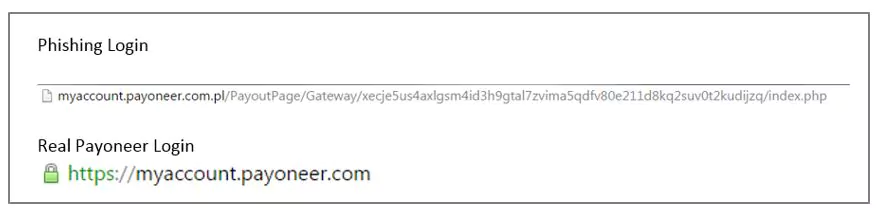
- Payoneer’s login pages are secured by https, the secure version of http, meaning that all communications between a user’s browser and Payoneer’s website are encrypted. If a user’s taken to a Payoneer login page that ISN’T https-secured, something’s amiss and users should take caution.
If you have any other tips to share or have any questions, please contact the Payoneer support team. We are available via email, live chat, phone, Twitter, and Facebook to answer your questions.
Related resources

VIDEO TEMPLATE GUIDE
SWIFT connects 11,000+ banks worldwide, powering secure international transfers. This guide explains how SWIFT works, why it’s still widely used, how to find your SWIFT code, and how Payoneer helps…


Summary and Quick Answer Example

Payoneer Account: How to open and how much does it cost?
What is it? Payoneer account, what are the types, and why it is beneficial for Ukrainian business. Also learn about taxation and who Payoneer is not suitable for.

Reduce Payoneer Costs: Strategies for Cost Savings
Find out how to withdraw money from Payoneer to Ukraine: an overview of banks, types of accounts, and advice on how to minimize commissions and risks

How to withdraw money from Payoneer to Ukraine
Find out how to withdraw money from Payoneer to Ukraine: an overview of banks, types of accounts, and advice on how to minimize commissions and risks

Guide to payment gateways in Pakistan
Explore major payment gateways in Pakistan to see which one will work for your business. Find out what a gateway is and how to set it up on your website.

Payoneer, SWIFT and ACH Transfers: What’s the Difference?
If you're a Ukrainian freelancer, entrepreneur, or business owner working with international clients, you've likely faced this question: What’s the best way to receive cross-border payments? SWIFT transfers, ACH, and…
The Best Ways to Receive Payment Online as an International Business
International payments don’t have to be slow or expensive. This guide compares methods like SWIFT and ACH, explains common challenges, and shows how Payoneer simplifies global payments with multi-currency accounts…

Best Online Payment Systems for a Small Business
Small businesses need secure, fast ways to accept payments. This guide compares top processors like PayPal, Stripe, Square, and Payoneer, outlining key features, fees, setup steps, and why Payoneer is…
Latest articles
-

One Wallet for Every Marketplace: How Lean Sellers Handle Global Money
Learn how a single multi-currency account can help simplify global payment operations and reduce the admin work that slows growth.
-
How Singapore Corporate Service Providers Can Differentiate in an Increasingly Competitive Market
Incorporation and compliance are no longer enough to stand out. Here’s how leading Corporate Service Providers are evolving their business models—and what it means for the future of the industry.
-
From Incorporation to Operation: What Singapore Corporate Service Providers Need to Help Clients Scale Across Asia
International expansion doesn’t end with company incorporation. Learn how Corporate Service Providers can help businesses build the legal, financial, and operational foundations needed for sustainable cross-border growth.
-
What’s Actually Disrupting Cross-Border Businesses Right Now: Payoneer Global Business Sentiment Survey, Q2 2026
Based on a survey of 8,626 businesses across 20 countries, conducted in May 2026.
-
When to Scale Your VA Business: 5 Signs You’re Ready to Build an Agency in the Philippines
The Philippines has become one of the world’s leading sources of virtual talent. But many Filipino virtual assistants aren’t just building freelance careers anymore — they’re quietly building export businesses. Here’s how to know if you’ve already made the transition.
-
Test: Global money transfers: How to make safe international transactions
In our interconnected world, global money transfers are an essential part of business and personal finance. Whether you’re a small business owner expanding into international markets, a freelancer working with clients abroad, or a consumer purchasing products from another country, understanding how to transact safely on a global scale is crucial.






Disclaimer
The information in this article/on this page is intended for marketing and informational purposes only and does not constitute legal, financial, tax, or professional advice in any context. Payoneer and Payoneer Workforce Management are not liable for the accuracy, completeness or reliability of the information provided herein. Any opinions expressed are those of the individual author and may not reflect the views of Payoneer or Payoneer Workforce Management. All representations and warranties regarding the information presented are disclaimed. The information in this article/on this page reflects the details available at the time of publication. For the most up-to-date information, please consult a Payoneer and/or Payoneer Workforce Management representative or account executive.
Availability of cards and other products is subject to customer’s eligibility. Not all products are available in all jurisdictions in the same manner. Nothing herein should be understood as solicitation outside the jurisdiction where Payoneer Inc. or its affiliates is licensed to engage in payment services, unless permitted by applicable laws. Depending on or your eligibility, you may be offered the Corporate Purchasing Mastercard, issued by First Century Bank, N.A., under a license by Mastercard® and provided to you by Payoneer Inc., or the Payoneer Business Premium Debit Mastercard®, issued and provided from Ireland by Payoneer Europe Limited under a license by Mastercard®.
Skuad Pte Limited (a Payoneer group company) and its affiliates & subsidiaries provide EoR, AoR, and contractor management services.
