
U.S. Tariff Refunds Are Now Open: How Global Sellers Can Claim Refunds and Receive Funds Through Payoneer
Paid U.S. import tariffs? Learn how eligible global sellers can claim refunds through CBP and receive funds using Payoneer USD receiving accounts.
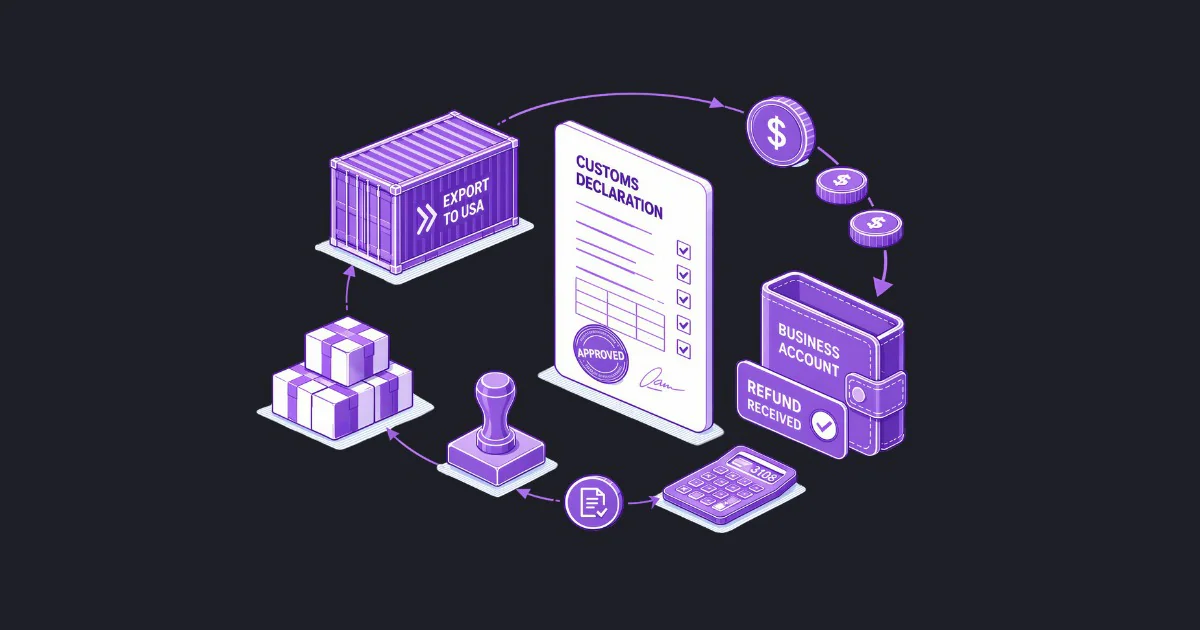

If your business paid U.S. import tariffs, you may be entitled to a refund — and many global sellers may not be aware of this possibility.
As of April 20, 2026, U.S. Customs and Border Protection (CBP) announced that it began accepting certain refund applications for previously paid tariffs through the ACE Portal.
The opportunity is significant. Based on global news sources:
- Over 300,000 businesses may be eligible
- Total refunds are estimated at $134B–$166B globally
- Many cross-border sellers may have paid these tariffs directly without realizing they can now recover them
But many businesses are running into one major issue: refunds are typically issued via U.S. domestic bank transfer rails. To receive funds directly from CBP, businesses generally need U.S. receiving account details.
Many non-U.S. businesses don’t have this set up.
That’s where Payoneer comes in. Eligible businesses may be able to use Payoneer’s USD receiving accounts to receive U.S. tariff refunds directly, subject to Payoneer’s terms, eligibility requirements, and applicable laws, without having to open a traditional U.S. bank account.
Who may be eligible?
You may want to review your potential eligibility if:
- Your business directly paid U.S. import tariffs
- You shipped goods to the U.S. under DDP (Delivered Duty Paid) terms, where the seller is typically responsible for duties, taxes, and shipping costs
- You acted as the Importer of Record (IOR)
- Your freight forwarder or customs broker is not already managing refunds on your behalf
This may be particularly relevant for cross-border eCommerce sellers. For example: Some online marketplaces may structure shipping and import responsibilities differently, depending on the seller’s setup and contractual terms. This means many global sellers may have directly paid tariffs and could be eligible for refunds.
Who may not be eligible?
You may not be eligible if:
- Your U.S. buyer or importer paid the tariffs
- Your freight forwarder is already handling refund claims
- Your customs broker has already submitted claims on your behalf
Because trade structures vary, we recommend confirming eligibility with your freight forwarder, customs broker, or logistics provider before applying.
How Payoneer may help eligible businesses receive approved refunds
Once a refund is approved by the relevant authority, businesses also need a reliable way to receive funds.
Refund payouts are typically issued through U.S. domestic bank transfer rails, which creates friction for many global businesses that don’t have access to U.S. receiving account details.
With Payoneer, eligible businesses can:
- Receive U.S. tariff refunds where permitted without opening a traditional U.S. bank account
- Access USD receiving account details designed for eligible global businesses
- Avoid relying on third parties to collect refunds on their behalf
- Use refunded funds in accordance with Payoneer’s terms, including paying suppliers or managing cash flow
For businesses recovering significant tariff payments, having the right payout infrastructure in place can help ensure funds are received quickly and directly.
What businesses should do next
If you believe your business may be eligible for a tariff refund, here’s how to get started:
1. Confirm whether you’re eligible
Check whether your business directly paid U.S. import duties. This often applies to businesses that:
- Shipped under DDP (Delivered duty paid) terms
- Acted as the Importer of Record (IOR)
- Handled duties directly rather than through a U.S. buyer
If you’re unsure, speak with your freight forwarder, customs broker, or logistics partner.
2. Check whether someone is already managing your refund
Some logistics providers or customs brokers may already be helping customers file claims. Confirm whether:
- They’re submitting on your behalf
- Additional fees apply
- You need to provide your own payout details
3. Prepare a way to receive your refund
CBP issues refunds only via U.S. domestic bank transfers (ACH).
A Payoneer USD receiving account has the details for a U.S. bank account and can be used to receive these funds. There are already cases where international sellers have successfully received refunds via Payoneer.
Check if you already have USD receiving account:
- Log in to Payoneer
- Go to Get Paid→ Receiving Accounts
- If “USD (United States)” appears, it is available for use
If you do not have one: You can request USD receiving account directly from your Payoneer account by selecting Add a new receiving account → USD (United States)
Please note: Registering a bank account alone does not trigger a refund.
A CAPE application must be submitted through CBP’s ACE system by the Importer of Record (IOR) or a licensed customs broker. Working with a customs broker is strongly recommended.
4. Submit your refund claim through the appropriate channel
This may be through:
- CBP’s ACE Portal
- Your customs broker
- Your freight forwarder
- Another approved filing partner
5. Monitor your refund status
Processing timelines vary depending on CBP and other factors. Online estimates suggest approximately 60–90 days. Some customers may see deposits labeled as: TREAS 310
Don’t leave refund money unclaimed
If your business paid U.S. tariffs, this could be an opportunity to recover capital that’s already yours. The earlier you confirm eligibility and prepare your receiving account details, the faster you can apply.
Disclaimer: This content is provided for general informational purposes only and does not constitute legal, tax, or customs advice. Eligibility for U.S. tariff refunds, application requirements, approval decisions, processing timelines, and payout methods are determined solely by U.S. Customs and Border Protection (CBP) and other relevant authorities.
Payoneer does not provide customs, trade, or refund filing services and is not involved in the submission, review, or approval of tariff refund claims. Payoneer may provide eligible customers with payment services to receive approved funds, subject to Payoneer’s terms, eligibility requirements, and applicable laws.
Businesses should consult their customs broker, freight forwarder, logistics provider, or professional advisors to confirm eligibility and understand applicable requirements before applying.
Frequently asked questions (FAQs)
No. Payoneer enables eligible businesses to receive U.S. payments without opening a traditional U.S. bank account.
Possibly — but some providers may charge fees or may not support the process.
Current estimates suggest approximately 60–90 days, depending on CBP processing timelines.
Potentially yes. Many marketplace sellers operate under shipping structures where they may have directly paid duties. Confirm with your logistics provider first.
Some customers may see deposits labeled: TREAS 310 or US CUSTOMS
Related resources

Pakistan’s IT Exports: What’s Driving the Surge in 2026
Pakistan IT exports in 2026 are surging, fueled by global IT services and outsourcing demand. Here’s what’s powering growth and how businesses can scale.


US Tightens Import Rules: How Indian Exporters Can Stay Competitive
The U.S. has suspended its $800 de minimis duty exemption. Discover how this impacts Indian exporters, shipping costs, and cross-border eCommerce strategies.

Bangladesh’s Digital Revolution: How Service Exporters are Scaling Globally
From freelancing to IT services, Bangladesh is quietly becoming a global services hub. Discover how digital entrepreneurs are tapping new markets, overcoming payment friction, and powering the next chapter of…

Tariffs and Trade: A CFO’s Roadmap for Service Export Growth
CFOs in Bangladesh are reshaping how service exporters scale in uncertain times. As global trade tensions rise, the country’s IT and business services sector is booming—reaching $1.4B in 2024 with…

No Ports, No Tariffs: How Pakistan’s Online Service Exporters Stay Resilient
Pakistan’s IT and digital service exports are thriving at $3.2B in FY24; immune to tariffs, port delays, and customs costs. From BPO to game dev to freelancing, talent and forex…

How to Tap New Trade Corridors: Connecting Pakistan with the UK and Emerging Markets
Pakistan’s exporters are reducing US reliance by tapping the UK and regional markets. With UK trade hitting £4.7B, DCTS benefits, and SEZ-driven efficiency, sectors from textiles to IT are thriving.…

3 Things You Need to Know About Forming a U.S. Company (And How We Can Help You Do It)
For any cross-border business, the current tariff talk coming out of the United States is presenting new challenges. But, as a trusted specialist in borderless business, we have some ideas,…

Leveraging Singapore as a Trade Hub: How Businesses Can Expand into ASEAN and Beyond
Singapore is more than a location—it’s a regional command center. With strong infrastructure, transparent regulations, and seamless financial services, it gives companies a strategic base for ASEAN growth. This guide…

How SMEs Can Leverage Singapore’s Free Trade Agreements (FTAs) to Minimize Tariff Costs and Expand Globally
Singapore’s 27 FTAs are a major but underused advantage for SMEs. Agreements like the RCEP connect Singapore to 14 markets with preferential trade terms, reducing costs and easing market entry.…
Latest articles
-

Discover Your All-In-One Ecommerce Payments Solution
Learn how eCommerce businesses can use Payoneer to receive marketplace payments, pay suppliers, manage multiple currencies, access working capital, and streamline global business payments.
-
Your Business Payments Are in Good Hands
Learn how to use Payoneer to receive payments from clients and marketplaces, access your funds, pay suppliers, manage currencies, and use additional tools that help simplify global business payments.
-
Avail the Most Trusted Payment Partner in India
Learn how businesses in India can use Payoneer to receive cross-border payments, withdraw earnings automatically, access Digital FIRCs, pay European VAT, and manage international business payments from one account.
-
Discover Payoneer’s Services for Your Business
Learn how to make the most of your Payoneer account, from receiving international payments and requesting payments from clients to withdrawing funds, paying suppliers, managing currencies, and accessing additional business tools.
-
How to Integrate Payoneer Checkout with Ueeshop
Learn how to integrate Payoneer Checkout with Ueeshop, configure your payment setup, and discover how to accept secure payments while supporting your cross-border ecommerce business.
-
How to Integrate Payoneer Checkout with WooCommerce
Learn how to integrate Payoneer Checkout with WooCommerce, configure your preferred checkout experience, and start accepting secure online payments through your WordPress store.






Disclaimer
The information in this article/on this page is intended for marketing and informational purposes only and does not constitute legal, financial, tax, or professional advice in any context. Payoneer and Payoneer Workforce Management are not liable for the accuracy, completeness or reliability of the information provided herein. Any opinions expressed are those of the individual author and may not reflect the views of Payoneer or Payoneer Workforce Management. All representations and warranties regarding the information presented are disclaimed. The information in this article/on this page reflects the details available at the time of publication. For the most up-to-date information, please consult a Payoneer and/or Payoneer Workforce Management representative or account executive.
Availability of cards and other products is subject to customer’s eligibility. Not all products are available in all jurisdictions in the same manner. Nothing herein should be understood as solicitation outside the jurisdiction where Payoneer Inc. or its affiliates is licensed to engage in payment services, unless permitted by applicable laws. Depending on or your eligibility, you may be offered the Corporate Purchasing Mastercard, issued by First Century Bank, N.A., under a license by Mastercard® and provided to you by Payoneer Inc., or the Payoneer Business Premium Debit Mastercard®, issued and provided from Ireland by Payoneer Europe Limited under a license by Mastercard®.
Skuad Pte Limited (a Payoneer group company) and its affiliates & subsidiaries provide EoR, AoR, and contractor management services.
