
Payoneer Now Integrated with Envoice
When you’re working for yourself, successful time management is crucial. Wasting too much time on the lateral tasks and not on your actual work can make freelancing more complicated than it needs to be. The global freelance community is growing at a staggering rate, and technology is catching up. There are many tools at the freelancer’s…

When you’re working for yourself, successful time management is crucial. Wasting too much time on the lateral tasks and not on your actual work can make freelancing more complicated than it needs to be.
The global freelance community is growing at a staggering rate, and technology is catching up. There are many tools at the freelancer’s disposal to make the tasks of client management, marketing and finances as seamless and pain-free as possible. Perhaps, no tool is more important to the freelancers than a tool that helps them bill clients and track payments.
Introducing: Envoice.
Envoice is a user-friendly invoicing platform that is designed specifically for freelancers. Powered by Emit Knowledge, Envoice is a powerful app that helps both freelancers and their clients manage payments. Invoices are easy to build and send, and the end result is a professional product.
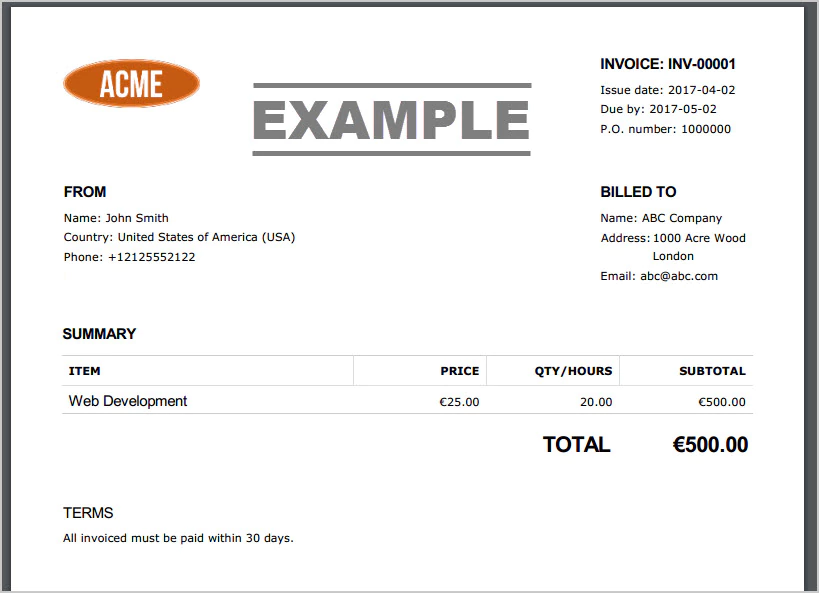
Invoice example created with Envoice
In addition to the easy creation of the invoice, freelancers can:
- Know when clients interact with the invoice – via tracking issued invoices
- Set automatic email and text message reminder for both the sender and the clients for due invoices
- Attach logged hours, agreements or any additional files with the invoice, uploaded from Dropbox or Google Drive
- Enjoy predictive invoicing – Envoice will set client and invoice number based on previous invoices
- Apply discounts on the invoice, when relevant
- Use PO numbers when issuing invoices for big companies
- Grow with the community, thanks to the community articles submitted by other freelancers
How do I set up my Payoneer account in Envoice?
1. Log in to your Envoice account.2. In the Receive Payments menu, select Connect with Payoneer.
3. A new tab will open in your browser. Click on Connect.
4. You will now be redirected to a Payoneer sign-up page. If you already have a Payoneer account, click on the link to sign in. If not, complete the sign-up process by selecting your preferred withdrawal method and clicking on ‘SIGN UP’.5. Once your Payoneer account is paired, the icon in Receive Payments will become On Payoneer. Click on the slider to activate this pairing.
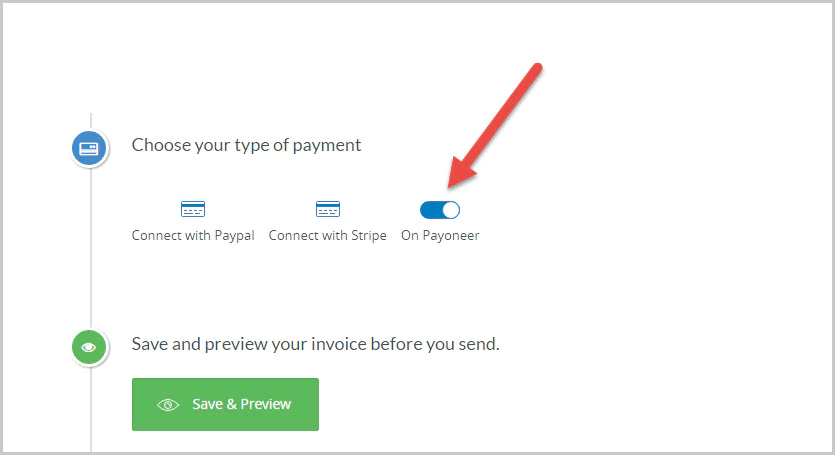
In addition, at the bottom of a created invoice, you will be able to choose Payoneer as your payment type.
Send your invoice to your client, and you’re good to go!
How will it look for my client?
When you send your client the invoice, they will be prompted to Pay with Payoneer, right from the invoice.
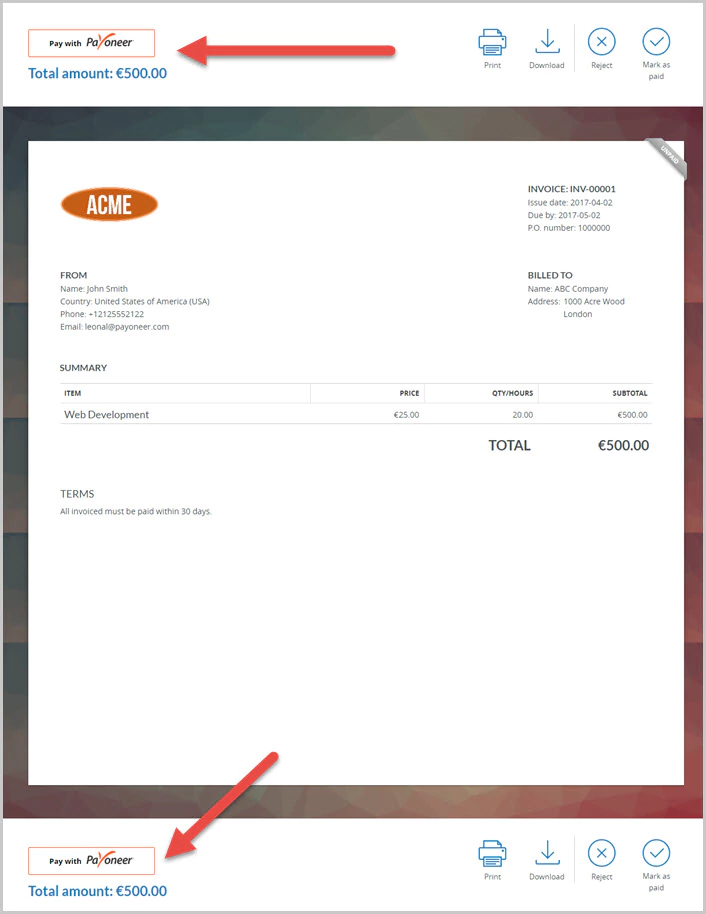
Once your client clicks on Pay with Payoneer, they will then have several options for payment. Once payment is complete, the funds will be received directly into your linked Payoneer account.
To get detailed info on linking your accounts, check out Envoice’s full guide here.
[cta-button text=”Log in to your Envoice account ” url=”https://www.envoice.in/invoice/new” color=”#428BCA” type=”referral”]
Related resources

Leave policy in China
A simple guide to leave policies in China, including annual leave, sick leave, maternity leave, paternity leave, public holidays, and other statutory leave entitlements.


Employment laws in Denmark
Understand employment laws in Denmark, including working hours, leave, termination rules, and compliance tips for hiring.
Your guide to payroll in Denmark
A detailed look at Denmark payroll, including pay cycles, salary tax in Denmark, employer taxes, deductions, and payroll compliance. Explore tips for payroll management in Denmark.

Leave policy in Portugal
Learn about the different leave policies entitled to the Portuguese workforce, along with complete compliance with Payoneer Workforce Management.

Leave policy in Vietnam
Learn about leave policies in Vietnam. This guide covers sick days, maternity leave, and public holidays in Vietnam
Planning to hire employees in Denmark? Here’s a quick guide
Learn about employment regulations in Denmark, tax obligations, leave policies, and how Payoneer Workforce Management helps you engage talent compliantly.

Employment laws in Costa Rica
A guide to employment laws in Costa Rica covering labor law compliance, contracts, working hours, overtime, termination, and severance pay. Explore how an EOR can help.

Employment laws in Romania
Both employers and employees must know the employment laws in Romania. Right from minimum wage rules to termination procedures, here's what you need to know.

Payoneer Workforce Management recognized as a global leader across key categories in G2’s spring 2026 reports
G2’s Spring 2026 reports name Payoneer Workforce Management, a leader across global workforce categories, highlighting trusted EOR, payroll, onboarding, and compliance tools.
Latest articles
-

How New Game Studios in the Philippines Manage Revenue Across Global Platforms
This guide explores how game studio CEOs and founders can utilize fragmented income streams from Steam, App Stores, ad networks, and more, while mitigating FX volatility and legacy banking lags.
-
Leave policy in China
A simple guide to leave policies in China, including annual leave, sick leave, maternity leave, paternity leave, public holidays, and other statutory leave entitlements.
-
Employment laws in Denmark
Understand employment laws in Denmark, including working hours, leave, termination rules, and compliance tips for hiring.
-
Your guide to payroll in Denmark
A detailed look at Denmark payroll, including pay cycles, salary tax in Denmark, employer taxes, deductions, and payroll compliance. Explore tips for payroll management in Denmark.
-
Leave policy in Portugal
Learn about the different leave policies entitled to the Portuguese workforce, along with complete compliance with Payoneer Workforce Management.
-
Leave policy in Vietnam
Learn about leave policies in Vietnam. This guide covers sick days, maternity leave, and public holidays in Vietnam





Disclaimer
The information in this article/on this page is intended for marketing and informational purposes only and does not constitute legal, financial, tax, or professional advice in any context. Payoneer and Payoneer Workforce Management are not liable for the accuracy, completeness or reliability of the information provided herein. Any opinions expressed are those of the individual author and may not reflect the views of Payoneer or Payoneer Workforce Management. All representations and warranties regarding the information presented are disclaimed. The information in this article/on this page reflects the details available at the time of publication. For the most up-to-date information, please consult a Payoneer and/or Payoneer Workforce Management representative or account executive.
Availability of cards and other products is subject to customer’s eligibility. Not all products are available in all jurisdictions in the same manner. Nothing herein should be understood as solicitation outside the jurisdiction where Payoneer Inc. or its affiliates is licensed to engage in payment services, unless permitted by applicable laws. Depending on or your eligibility, you may be offered the Corporate Purchasing Mastercard, issued by First Century Bank, N.A., under a license by Mastercard® and provided to you by Payoneer Inc., or the Payoneer Business Premium Debit Mastercard®, issued and provided from Ireland by Payoneer Europe Limited under a license by Mastercard®.
Skuad Pte Limited (a Payoneer group company) and its affiliates & subsidiaries provide EoR, AoR, and contractor management services.
