
The State of Freelancing During COVID-19: 3 Takeaways from our Report
As COVID-19 continues to spread around the world, the remote workforce has become the new norm for the first time in modern history. Many freelancers and gig-workers share the same concerns for job security and financial stability, leaving them to wonder – what’s in store for the future of freelancing? Will the future of work…


As COVID-19 continues to spread around the world, the remote workforce has become the new norm for the first time in modern history.
Many freelancers and gig-workers share the same concerns for job security and financial stability, leaving them to wonder – what’s in store for the future of freelancing? Will the future of work shift to be entirely remote now that we see work can be done at a high level remotely and result in more outsourcing, or will businesses need to cut costs and reduce the amount of outsourced work?
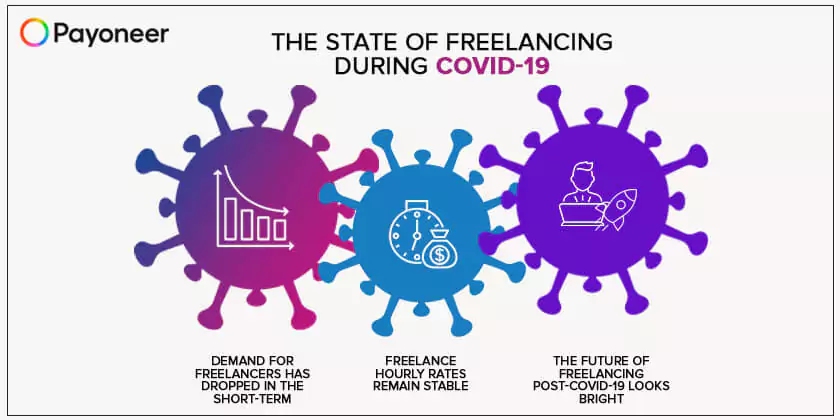
To better understand how the current pandemic has affected the freelance economy, Payoneer surveyed over 1,000 freelancers from 100+ countries, asking them to share how COVID-19 has impacted the demand for their services, their hourly rates and what opportunities and risks they expect will arise from the crisis. Survey respondents provided us with unique insights into what they believe is the future of freelancing and how they expect the workforce to bounce back once the outbreak is under control.
Let’s take a deeper look into three takeaways from our report and see what freelancers had to say.
1. Demand for Freelancers Has Dropped in the Short-Term
We asked freelancers if over the past three months, they’ve seen a change in demand for their freelance services. Close to 32% of the freelancers surveyed mentioned that demand has decreased greatly, suggesting that businesses and companies have cut freelancing costs and have halted any new projects or contracts. However, there is a bright side as 23% of freelancers reported that business has remained as usual with an additional 17% saying that demand has actually increased during this period.
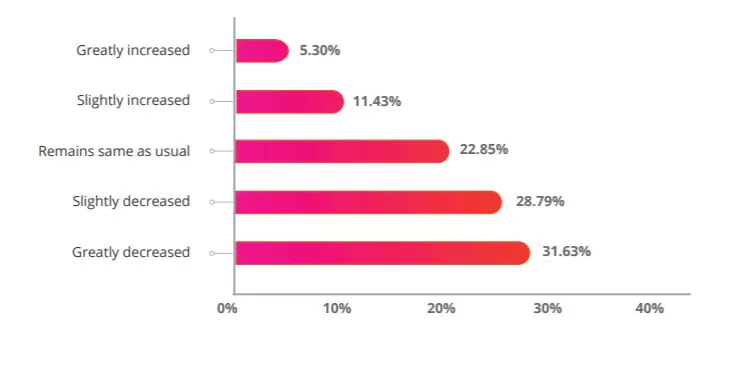
*Total numbers may fall slightly below 100% in cases where some survey respondents skipped the specific question.
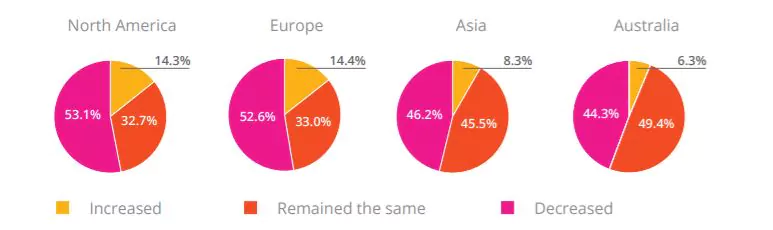
Furthermore, freelancers who work with international clients based in North America and Europe saw the highest slowdown in demand. Those with clients based in Asia and Australia – regions which first experienced the outbreak, have seen less of a decrease in demand for freelancers. This suggests that as certain regions slowly recover from the outbreak, the demand for freelancers will rebound.
2. Freelance Hourly Rates Remain Stable
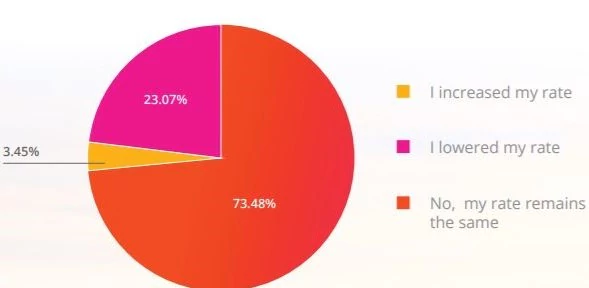
Despite the fact that for some freelancers, demand has decreased, hourly rates seem to have remained solid for a large majority. Close to 74% of survey respondents reported that their rates have remained the same, while 23% mentioned that they’ve lowered their rates due to the pandemic. Perhaps freelancers are in general, pretty confident that their rates offer great value and even with new freelancers jumping on the bandwagon, there’s no urgent need to change their fees.
3. The Future of Freelancing Post-COVID-19 Looks Bright
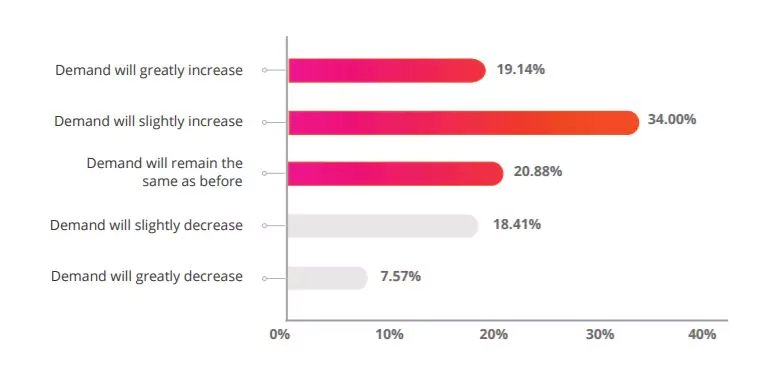
As the global economy faces one of the toughest times in history, freelancers and gig-workers are asking themselves, what’s next and will the economy prevail? We asked freelancers whether they believe demand for their services will change once the outbreak is under control. Based on our results, a total of 53% expect that demand will increase, while a total of 21% think that demand will remain the same prior to the pandemic.
Summary
Overall, our survey shows that while demand for freelancers appears to have slowed in the short-term, many are optimistic about the future and believe that it’s just a matter of time until businesses get back on their feet and return to outsourcing. As more businesses around the world adapt to working online, it’s clear that remote work may be here to stay.
Download our report today to learn more about how freelancers have been impacted by the COVID-19 pandemic.
Related resources

What’s Actually Disrupting Cross-Border Businesses Right Now: Payoneer Global Business Sentiment Survey, Q2 2026
Based on a survey of 8,626 businesses across 20 countries, conducted in May 2026.


US vs Europe Employment Costs and Net Pay Compared: 2026 Study
How much does it really cost to hire in Europe versus the US? Explore a data-backed comparison of statutory employer costs, local salaries, and net pay across 12 leading cities.
Strategic Optimization of Cross-Border Fund Management
Learn how overseas construction projects are managing complex fund flows and evolving contract structures, along with ways to optimize global fund management.
Latest articles
-

Discover Your All-In-One Ecommerce Payments Solution
Learn how eCommerce businesses can use Payoneer to receive marketplace payments, pay suppliers, manage multiple currencies, access working capital, and streamline global business payments.
-
Your Business Payments Are in Good Hands
Learn how to use Payoneer to receive payments from clients and marketplaces, access your funds, pay suppliers, manage currencies, and use additional tools that help simplify global business payments.
-
Avail the Most Trusted Payment Partner in India
Learn how businesses in India can use Payoneer to receive cross-border payments, withdraw earnings automatically, access Digital FIRCs, pay European VAT, and manage international business payments from one account.
-
Discover Payoneer’s Services for Your Business
Learn how to make the most of your Payoneer account, from receiving international payments and requesting payments from clients to withdrawing funds, paying suppliers, managing currencies, and accessing additional business tools.
-
How to Integrate Payoneer Checkout with Ueeshop
Learn how to integrate Payoneer Checkout with Ueeshop, configure your payment setup, and discover how to accept secure payments while supporting your cross-border ecommerce business.
-
How to Integrate Payoneer Checkout with WooCommerce
Learn how to integrate Payoneer Checkout with WooCommerce, configure your preferred checkout experience, and start accepting secure online payments through your WordPress store.






Disclaimer
The information in this article/on this page is intended for marketing and informational purposes only and does not constitute legal, financial, tax, or professional advice in any context. Payoneer and Payoneer Workforce Management are not liable for the accuracy, completeness or reliability of the information provided herein. Any opinions expressed are those of the individual author and may not reflect the views of Payoneer or Payoneer Workforce Management. All representations and warranties regarding the information presented are disclaimed. The information in this article/on this page reflects the details available at the time of publication. For the most up-to-date information, please consult a Payoneer and/or Payoneer Workforce Management representative or account executive.
Availability of cards and other products is subject to customer’s eligibility. Not all products are available in all jurisdictions in the same manner. Nothing herein should be understood as solicitation outside the jurisdiction where Payoneer Inc. or its affiliates is licensed to engage in payment services, unless permitted by applicable laws. Depending on or your eligibility, you may be offered the Corporate Purchasing Mastercard, issued by First Century Bank, N.A., under a license by Mastercard® and provided to you by Payoneer Inc., or the Payoneer Business Premium Debit Mastercard®, issued and provided from Ireland by Payoneer Europe Limited under a license by Mastercard®.
Skuad Pte Limited (a Payoneer group company) and its affiliates & subsidiaries provide EoR, AoR, and contractor management services.
