
Planning to hire employees in Jordan? Here’s a quick guide
Learn how to hire employees in Jordan, from contracts and payroll to leave laws. See how Payoneer Workforce Management helps engage local talent.


The hiring process in Jordan is a complex process involving navigation through the Jordanian labor code. If you want to hire employees, you can either establish a local entity or partner with an Employer of Record.
An Employer of Record (EOR) helps you engage with local talent and manage employees without setting up a local entity.
This guide walks through what hiring in Jordan actually looks like: how to engage talent, where to find candidates, what onboarding involves, and the laws that affect day-to-day employment. We will also cover how working with an Employer of Record (EOR) can simplify workforce management in Jordan.
How to hire in Jordan
There are three common ways you can engage employees in Jordan:
1) Set up a legal entity in Jordan
Setting up a local entity gives you direct control. You recruit employees in Jordan, run your own payroll, and operate without going through a third party.
The setup involves registering with several authorities, including the Ministry of Industry, Trade, and Supply (Companies Control Department), the local tax authority, and the Social Security Corporation.
From start to ongoing compliance, the process takes months and a fair budget.
This route is suitable for companies planning long-term growth in Jordan with a sizable team. For smaller hiring needs, the cost rarely makes sense.
2) Hire contractors in Jordan
Independent contractors work well for short-term projects or specialized work. You can skip the payroll setup, social security filings, and most of the HR admin. Contractors typically handle their own hours, pay their own taxes, and do not get statutory leave or benefits.
The risk here is misclassification. A contractor working like an employee can trigger reclassification by Jordanian labor authorities. These signs include a fixed schedule, dedicated work, and consistent reporting.
Moreover, reclassification can lead to back-paid social security contributions, fines, and possible wrongful dismissal claims. It is worth reading up on contractor misclassification penalties before going this route.
3) Use an Employer of Record (EOR) in Jordan
An Employer of Record (EOR) is a third-party organization. It legally employs talent in Jordan on your behalf and helps you manage employment contracts, payroll, tax withholding, social security, and benefits.
For companies wanting to engage talent in Jordan without registering a local entity, this is usually a quick option. An EOR like Payoneer Workforce Management supports hiring in 160+ countries. So whether you are hiring one engineer in Amman or building a regional team across Jordan, Saudi Arabia, and the UAE, the same platform works.
Where to find employees in Jordan
Recruitment in Jordan starts with knowing where local candidates are looking. Here are some common options to find employees in Jordan:
1) Popular job boards in Jordan
Common platforms include:
- Akhtaboot, one of Jordan’s largest local job platforms
- Bayt.com, with a broad MENA reach
- Forasna
- Tanqueeb
- Indeed Jordan
- Glassdoor
2) Work with local recruitment agencies
Recruitment agencies in Jordan know the local market well and can save you time on screening. They work best for hard-to-source roles or senior-level hires.
Most agencies charge a placement fee, which is usually a percentage of the first-year salary, so factor that into the budget.
3) EOR support
EOR support is not limited to just payroll. It primarily helps you with onboarding, drafting employment contracts, navigating local compliance, statutory requirements, and workforce management in Jordan.
This allows you to manage resume screenings and interviews your way while receiving expert support with local compliance.
Onboarding employees in Jordan
Onboarding usually takes a few working days when an EOR handles it. Whether you do this in-house or with a partner, the steps look similar:
- Run a background check (with the candidate’s written consent)
- Issue a written offer letter, followed by a signed English or Arabic-language employment contract
- Register the employee with the Ministry of Labor within the first month of employment
- Enroll the employee with the Social Security Corporation (SSC) from day one
- Set up the monthly payroll in JOD
- Arrange devices, system access, and any benefits enrollment, such as private health insurance
- Schedule an orientation session for day one
Private health insurance plans are usually arranged at the employer’s discretion for employees and their dependents. Premiums vary based on the plan and coverage.
Key employment laws and requirements in Jordan
Most employment regulations in Jordan come from the Jordanian Labor Law, as amended over the years. The Social Security Law of 2014 covers benefits administered by the SSC.
These two laws form the basis of what every employer needs to know.
Employment contracts
You have to draft contracts in Arabic and share one copy with the employees. An English version can run alongside the Arabic one. Standard contract content includes:
- Job title, scope, and reporting structure
- Salary, allowances, and pay schedule
- Working hours and rest days
- Probation period (capped at three months and not renewable)
- Annual leave and other entitlements
- Notice period and termination terms
Two contract types are common: fixed-term, used for project or defined-period roles, and indefinite-term, which are open-ended.
Employment benefits
Employees in Jordan are entitled to a range of statutory leaves and benefits. Here is what employers need to provide:
| Leave type | Entitlement |
|---|---|
| Annual leave (under 5 years’ service) | 14 days |
| Annual leave (5+ years’ service) | 21 days |
| Sick leave | 14 days |
| Maternity leave | 10 weeks (70 days) |
| Paternity leave | 3 days |
| Compassionate leave | 3 days (death of spouse, child, parent, or sibling) |
Other key benefits include:
- Childcare leave: Mothers can take up to 12 months of unpaid leave for childcare.
- Carry-forward: Annual leave can be carried forward for up to two years. Anything not used has to be paid out at the end of the carry-forward period or when the employee leaves.
- Social security: Both employer and employee contribute to the Social Security Corporation, which covers pensions, disability, maternity, work injury, and unemployment.
- Health insurance: Public health insurance is not mandatory in Jordan. Private health insurance is also optional but commonly offered to employees and their dependents.
- Annual bonus: Optional, at the employer’s discretion.
Working hours and holidays
Under Jordan’s Labor Law, the standard workweek can go up to 40 hours, with daily hours capped at ten, including overtime. However, mandatory overtime cannot exceed 30 days a year.
Overtime pay rates work out to:
- Normal days: 25% over the regular hourly rate
- Weekends and public holidays: 50% over the regular hourly rate
- Days off: Overtime can be substituted with days off if the employee agrees
Further, Jordan recognizes 16 public holidays each year. Three are statutory, and the rest are non-statutory. Religious observances like Eid Al-Fitr and Eid Al-Adha shift in date each year.
Tax obligations
Two main payroll contributions apply each month:
- Income tax withholding: Personal income tax follows a progressive scale of 5% to 30%, based on the employee’s income bracket. Employers withhold tax from each paycheck and submit it to the Income and Sales Tax Department (ISTD).
- Social Security Corporation contributions: The employer pays approximately 14.25% of the employee’s gross salary. The employee pays 7.5%. Contributions go toward pensions, disability, maternity benefits, work injury cover, and unemployment insurance.
Moreover, the minimum wage for full-time employees in Jordan is JOD 260 a month. The rule applies to Jordanian citizens and most non-Jordanian workers.
Employer-side costs in Jordan typically run around 16.25% on top of an annual USD 60,000 salary, depending on benefits and other local factors.
To estimate the full employment cost, use our employee cost calculator.
Termination and severance
The employment regulations in Jordan regarding termination are well-defined. Valid grounds for termination include:
- Resignation
- Mutual agreement
- End of probation, and
- Dismissal due to misconduct, poor performance, long unauthorized absence, or redundancy
Without valid grounds, termination can count as unfair dismissal, which opens the employer to additional compensation claims.
The standard notice period after probation is one month, unless the contract specifies otherwise. However, no statutory notice applies during probation.
Severance is usually half a month’s salary for each year of service, with a minimum of two months. If no notice was given, an extra 30 days of pay applies.
Explore Payoneer Workforce Management in Jordan
Hiring across borders has its complications. Tax regimes, leave policies, and contract requirements vary by country, and Jordan is no different.
Payoneer Workforce Management helps you engage talent in Jordan and 160+ other countries without setting up a local entity.
As your EOR partner, we can assist with:
- Drafting locally compliant employment contracts
- Running monthly payroll in JOD
- Managing income tax withholding and contributions
- Setting up benefits, including private health insurance
- Tracking leave, time-off, and statutory holidays
If your needs lean toward contractors rather than full-time employees, our Agent of Record and Contractor Management System covers contracts, payments, and support to mitigate misclassification risks.
Looking to expand into the wider region? You can find country-specific information in our guides for Egypt and Morocco.
Book a demo to learn more.
Frequently asked questions (FAQs)
Yes. U.S. companies can hire through three routes: local entity setup, independent contractors, or partnering with an EOR. The EOR route doesn’t require entity registration while keeping the employment relationship compliant with Jordan’s Labor Law.
The minimum wage in Jordan is JOD 260 per month. The rate applies to full-time employees, both Jordanian and most non-Jordanian workers. Sector exceptions can apply in certain industries.
Every new hire must be registered with the Social Security Corporation (SSC) on day one. The employer pays around 14.25% of gross salary monthly, and the employee contributes 7.5%. SSC coverage includes retirement, disability, maternity, work injury, and unemployment.
Yes, hiring foreign workers in Jordan is allowed. They need a work permit issued by the Ministry of Labor, sponsored by the employer. The employer covers the permit fee and reports any employment status changes to the Ministry.
Payoneer Workforce Management offers local expertise and an EOR platform; it acts as the legal employer in Jordan. It supports employment contracts, payroll, tax filings, social security, and benefits. Companies can engage talent in Jordan without going through entity registration themselves.
Hire & pay globally with Payoneer Workforce Management
- Expand internationally in 160+ countries
- Run global payroll securely in a few clicks
- Stay compliant with local employment laws
- Let Payoneer Workforce Management manage benefits, work permits, timesheets, and more so you don’t have to


Schedule a demo
Related resources
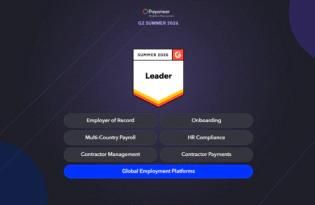
Payoneer Workforce Management named a leader across 12 categories in G2’s Summer 2026 reports
In G2’s Summer 2026 Reports, Payoneer Workforce Management earned leadership recognition across global workforce categories for its reliable payroll, onboarding, compliance, and Employer of Record solutions.


Planning to hire employees in Bulgaria? Here’s a quick guide
Learn how to hire employees in Bulgaria. Covers contracts, work permits, payroll, leave laws, and how Payoneer Workforce Management supports compliance.
Employment laws in Bulgaria
Learn about labor laws compliance in Bulgaria, including contracts, working hours, statutory rights, termination, notice periods, and severance.

Employment laws in Israel
Learn about employment laws in Israel, from contract terms to working hours, from minimum wage to mandatory benefits. Ensure labor law compliance in Israel.
Leave policy in Israel
Explore the leave policy in Israel covering annual leave, sick leave, maternity, paternity leave, and public holidays. Stay compliant with leave laws in Israel.
Your guide to payroll in Bulgaria
Learn how payroll in Bulgaria works, covering income tax, social security, minimum wage, payslip rules, and how to stay compliant after euro adoption.
Leave policy in Bulgaria
A guide to leave laws in Bulgaria, covering annual leave, public holidays, sick leave, maternity and paternity leave, and statutory leave entitlements.

Employment laws in Austria
Labor laws compliance in Austria explained: contracts, working hours, mandatory benefits, notice periods, severance, and key statutes every employer needs.
Leave policy in Austria
Understand leave laws in Austria covering annual leave, sick pay, maternity, paternity, parental leave, and other statutory entitlements that employers must offer.
Latest articles
-

Payoneer Workforce Management named a leader across 12 categories in G2’s Summer 2026 reports
In G2’s Summer 2026 Reports, Payoneer Workforce Management earned leadership recognition across global workforce categories for its reliable payroll, onboarding, compliance, and Employer of Record solutions.
-
What Is Remittance? A Simple Guide for Indian Freelancers and Professionals
Remittance means transferring money across borders. If you receive payments from international clients or have family abroad sending money home, here is what you need to know.
-
Top Online Payment Systems and Ecommerce Payment Methods in India
Explore the top online payment systems for e-commerce businesses in India. Learn how to accept payments securely and efficiently with Payoneer’s global solutions.
-
Planning to hire employees in Bulgaria? Here’s a quick guide
Learn how to hire employees in Bulgaria. Covers contracts, work permits, payroll, leave laws, and how Payoneer Workforce Management supports compliance.
-
Employment laws in Bulgaria
Learn about labor laws compliance in Bulgaria, including contracts, working hours, statutory rights, termination, notice periods, and severance.
-
Employment laws in Israel
Learn about employment laws in Israel, from contract terms to working hours, from minimum wage to mandatory benefits. Ensure labor law compliance in Israel.





Disclaimer
The information in this article/on this page is intended for marketing and informational purposes only and does not constitute legal, financial, tax, or professional advice in any context. Payoneer and Payoneer Workforce Management are not liable for the accuracy, completeness or reliability of the information provided herein. Any opinions expressed are those of the individual author and may not reflect the views of Payoneer or Payoneer Workforce Management. All representations and warranties regarding the information presented are disclaimed. The information in this article/on this page reflects the details available at the time of publication. For the most up-to-date information, please consult a Payoneer and/or Payoneer Workforce Management representative or account executive.
Availability of cards and other products is subject to customer’s eligibility. Not all products are available in all jurisdictions in the same manner. Nothing herein should be understood as solicitation outside the jurisdiction where Payoneer Inc. or its affiliates is licensed to engage in payment services, unless permitted by applicable laws. Depending on or your eligibility, you may be offered the Corporate Purchasing Mastercard, issued by First Century Bank, N.A., under a license by Mastercard® and provided to you by Payoneer Inc., or the Payoneer Business Premium Debit Mastercard®, issued and provided from Ireland by Payoneer Europe Limited under a license by Mastercard®.
Skuad Pte Limited (a Payoneer group company) and its affiliates & subsidiaries provide EoR, AoR, and contractor management services.
