
Your guide to payroll in South Korea
Learn how South Korea payroll works, including pay cycles, salary tax, social insurance, severance, and compliance tips for employers hiring in Korea.


The South Korean payroll runs monthly. Employers pay salaries in Korean Won on a fixed date each month, as set in the employment contract. Income tax in South Korea is progressive, ranging from 6% to 45%.
Moreover, enrollment in four social insurance programs is compulsory. Employees with at least one year of service are also entitled to severance pay.
This guide covers how wages are paid, what gets deducted, the benefits employers owe, and how Payoneer Workforce Management can help businesses pay employees in South Korea without setting up a local entity.
South Korea payroll: Wages and other payments
South Korean labor laws specify how wages are structured, when they must be credited to an employee’s account, and which premiums apply for hours worked outside the standard schedule. Here’s how each piece works.
Payroll cycle in South Korea
You must ensure that wages are paid at least once per month on a set date, as specified in the employment agreement. The Labor Standards Act (LSA) does not provide for a specified pay date, but the common practice is to pay by the last working day of the month.
Furthermore, you must ensure that the following requirements are met:
- Wages are paid directly to the employee, typically through bank transfers.
- Payslip requirements in South Korea may require you to share an itemized listing of gross salary, deductions, net pay, bonuses, allowances, and other details.
- Final salary payment, i.e., severance pay, to a leaving employee must be paid within fourteen days.
Minimum wage in South Korea
The national minimum wage in South Korea is KRW 9,860 per hour.
The rate typically applies uniformly across regions and industries. Employers are advised to check government sources for recent variations, if any.
Overtime pay
The standard workweek is 40 hours, capped at eight hours per day. Employees and employers can agree to up to 12 additional hours of overtime per week.
The Labor Standards Act prescribes premiums at 150% of ordinary wages for hours worked beyond the standard workweek.
For night work between 10:00 p.m. and 6:00 a.m or work on Sundays or paid public holidays, employees must be paid at 200% of their hourly wage.
Sick pay
There is no statutory sick leave in South Korea for everyday illness. Most employers provide paid sick days as a company policy, though it is not legally required.
However, you must provide paid leave for work-related injuries or illnesses until recovery. The compensation may be 60% of the regular salary.
Further, the Industrial Accident Compensation Insurance program covers longer-term cases.
Maternity pay
Eligible female employees receive 90 days of paid maternity leave (120 days for multiple or complicated births), split 45 days before and 45 days after the due date.
Employment Insurance reimburses part of the wages. However, you are required to cover the first 60 days (90 in priority employer companies).
Paternity pay
Eligible fathers can take ten days of paternity leave. Moreover, you are responsible for covering wages for five days.
You can fund wages for the remaining days from social security schemes within 90 days of birth.
Severance pay
Severance is mandatory for any employee with at least one year of continuous service, whether they resigned or were dismissed. Moreover, it must be paid within 14 days of the last working day.
You can use the following formula to calculate severance pay:
- 30 days of average wages for each full year worked, and
- Based on pay received in the three months before termination (including regular allowances, excluding one-time bonuses).
Many employers fund it through a retirement pension plan under the Act on the Guarantee of Employees’ Retirement Benefits.
Payroll in South Korea: Contributions and deductions
Employers withhold taxes from employee salaries and pay into four social insurance programs each month. Together, employer taxes in South Korea and employee-side deductions form the backbone of South Korea’s payroll processing. Let’s explore the specifics:
Salary tax in South Korea
Korea applies a progressive personal income tax from 6% to 45%.
A 10% local income tax is added on top of the national liability, effectively pushing top marginal rates above 49%.
Basically, you act as withholding agents, deducting income tax monthly and remitting it the following month.
Employer taxes in South Korea
Four social security contributions in South Korea form the bulk of employment costs in South Korea, split between the employer and the employee:
| Program | Employer | Employee |
|---|---|---|
| National Pension | 4.5% of gross | 4.5% of gross |
| National Health Insurance | 3.545% of gross | 3.545% of gross |
| Long-term care insurance | 0.455% of gross | 0.455% of gross |
| Employment Insurance | 1.15% to 1.75% | 0.9% |
| Workers’ Compensation Insurance | 0.644% to 18.60% (industry-based) | Not applicable |
Your payroll management in South Korea tools should be regularly updated with the changing premiums.
Other employee benefits
Korean law prescribes several statutory benefits that South Korean payroll teams need to track:
- Annual leave: 15 days of paid leave after one year, with one extra day for every two additional years. However, the overall annual leave is capped at 25 days.
- Public holidays: 12 paid holidays per year, with extras occasionally declared by the government.
- Childcare leave: Parents of children under eight can request up to one year of full-time or part-time leave, with an allowance paid through Employment Insurance. Moreover, you can set a policy to grant leave only after 30 days of prior notice.
- Menstrual leave: One day per month for female employees.
- Family-care leave: Up to 90 days of unpaid leave per year for a sick, injured, or elderly family member.
- Fertility leave: Up to three days, with the first day paid.
Furthermore, any unused leave can be carried forward or encashed.
South Korea payroll compliance best practices
Payroll compliance in South Korea comes down to repeatable processes and staying alert to regulatory change:
- Register new hires with the National Tax Service (NTS), National Pension Service, National Health Insurance Service (NHIS), and Employment Insurance agency, usually within 15 days of hire.
- Remit withheld income tax and social insurance contributions.
- Complete the year-end tax adjustment and file the annual withholding statement.
- Retain payroll, withholding, and disbursement records for a few years.
- Audit payroll after any change in bonus schemes, allowances, or working hours.
- Track updates from the Ministry of Employment and Labor (MOEL) and the National Tax Service (NTS). Minimum wage, pension rate, and Labor Standards Act changes can land mid-year.
- Even though there is no statutory 13th-month bonus, many large employers pay a year-end or holiday bonus by policy.
For international employers, our employee cost calculator may be useful to budget a new hire before onboarding.
Your options for payroll services in South Korea
Companies onboarding talent and running Korean payroll typically choose one of three paths:
- Set up a local entity: You get full admin control, but it requires several months of setup. It includes upfront legal and accounting costs and ongoing corporate compliance that can weigh heavily on a small team.
- Hire independent contractors: It is best for short-term projects, though Korean courts typically look past the contract language to assess how the work is actually done. Misclassification may trigger back-pay and unpaid contributions. However, a contractor management system keeps agreements, invoices, and payments compliant.
- Work with an Employer of Record (EOR): An EOR acts as the legal employer in Korea, handling contracts, payroll, tax withholding, and social insurance, while the client directs daily work. It is one of the quickest routes to engage and pay employees in South Korea without incorporating locally.
Payoneer Workforce Management supports workforce operations across 160+ countries and 70+ currencies, bringing EOR, Agent of Record (AOR), and contractor management into one dashboard.
For more context, you can see why an EOR accelerates global expansion or the companion Japan payroll guide for regional hiring plans.
Frequently asked questions (FAQs)
Payments are made in Korean Won once a month on a specified date in the contract. Typically, it is the last working day of the month. Employers have to provide a detailed payslip, and all final payments (severance pay) should be settled within 14 days of the termination of employment.
National income tax (from 6% to 45%) and contributions to the following social insurance schemes of employees should be deducted from their gross income:
- National Pension – 4.5%
- Health Insurance – 3.545%
- Long-Term Care Insurance – 0.455%
- Employment Insurance – 0.9%
These deductions usually amount to 28% of the gross salary. For a detailed breakdown, use our employee cost calculator.
Minimum wage in South Korea is 9,860 Korean Won. However, employers must refer to the government sources for any recent changes.
With an Employer of Record, you can engage and pay employees in South Korea without setting up a local entity. We help handle the contracts, payroll, and compliance so you can focus on the work itself.
Payoneer Workforce Management can be your Employer of Record in South Korea, which means we can help you draft contracts, calculate gross-to-net payments, make social insurance contributions, and manage severance payments.
Hire & pay globally with Payoneer Workforce Management
- Expand internationally in 160+ countries
- Run global payroll securely in a few clicks
- Stay compliant with local employment laws
- Let Payoneer Workforce Management manage benefits, work permits, timesheets, and more so you don’t have to


Schedule a demo
Related resources
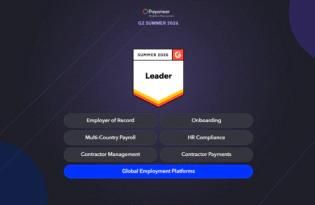
Payoneer Workforce Management named a leader across 12 categories in G2’s Summer 2026 reports
In G2’s Summer 2026 Reports, Payoneer Workforce Management earned leadership recognition across global workforce categories for its reliable payroll, onboarding, compliance, and Employer of Record solutions.


Planning to hire employees in Bulgaria? Here’s a quick guide
Learn how to hire employees in Bulgaria. Covers contracts, work permits, payroll, leave laws, and how Payoneer Workforce Management supports compliance.
Employment laws in Bulgaria
Learn about labor laws compliance in Bulgaria, including contracts, working hours, statutory rights, termination, notice periods, and severance.

Employment laws in Israel
Learn about employment laws in Israel, from contract terms to working hours, from minimum wage to mandatory benefits. Ensure labor law compliance in Israel.
Leave policy in Israel
Explore the leave policy in Israel covering annual leave, sick leave, maternity, paternity leave, and public holidays. Stay compliant with leave laws in Israel.
Your guide to payroll in Bulgaria
Learn how payroll in Bulgaria works, covering income tax, social security, minimum wage, payslip rules, and how to stay compliant after euro adoption.
Leave policy in Bulgaria
A guide to leave laws in Bulgaria, covering annual leave, public holidays, sick leave, maternity and paternity leave, and statutory leave entitlements.

Employment laws in Austria
Labor laws compliance in Austria explained: contracts, working hours, mandatory benefits, notice periods, severance, and key statutes every employer needs.
Leave policy in Austria
Understand leave laws in Austria covering annual leave, sick pay, maternity, paternity, parental leave, and other statutory entitlements that employers must offer.
Latest articles
-

Payoneer Workforce Management named a leader across 12 categories in G2’s Summer 2026 reports
In G2’s Summer 2026 Reports, Payoneer Workforce Management earned leadership recognition across global workforce categories for its reliable payroll, onboarding, compliance, and Employer of Record solutions.
-
What Is Remittance? A Simple Guide for Indian Freelancers and Professionals
Remittance means transferring money across borders. If you receive payments from international clients or have family abroad sending money home, here is what you need to know.
-
Top Online Payment Systems and Ecommerce Payment Methods in India
Explore the top online payment systems for e-commerce businesses in India. Learn how to accept payments securely and efficiently with Payoneer’s global solutions.
-
Planning to hire employees in Bulgaria? Here’s a quick guide
Learn how to hire employees in Bulgaria. Covers contracts, work permits, payroll, leave laws, and how Payoneer Workforce Management supports compliance.
-
Employment laws in Bulgaria
Learn about labor laws compliance in Bulgaria, including contracts, working hours, statutory rights, termination, notice periods, and severance.
-
Employment laws in Israel
Learn about employment laws in Israel, from contract terms to working hours, from minimum wage to mandatory benefits. Ensure labor law compliance in Israel.




Disclaimer
The information in this article/on this page is intended for marketing and informational purposes only and does not constitute legal, financial, tax, or professional advice in any context. Payoneer and Payoneer Workforce Management are not liable for the accuracy, completeness or reliability of the information provided herein. Any opinions expressed are those of the individual author and may not reflect the views of Payoneer or Payoneer Workforce Management. All representations and warranties regarding the information presented are disclaimed. The information in this article/on this page reflects the details available at the time of publication. For the most up-to-date information, please consult a Payoneer and/or Payoneer Workforce Management representative or account executive.
Availability of cards and other products is subject to customer’s eligibility. Not all products are available in all jurisdictions in the same manner. Nothing herein should be understood as solicitation outside the jurisdiction where Payoneer Inc. or its affiliates is licensed to engage in payment services, unless permitted by applicable laws. Depending on or your eligibility, you may be offered the Corporate Purchasing Mastercard, issued by First Century Bank, N.A., under a license by Mastercard® and provided to you by Payoneer Inc., or the Payoneer Business Premium Debit Mastercard®, issued and provided from Ireland by Payoneer Europe Limited under a license by Mastercard®.
Skuad Pte Limited (a Payoneer group company) and its affiliates & subsidiaries provide EoR, AoR, and contractor management services.
