
Employer of Record in India: Complete Guide 2026
Partner with an Employer of Record in India, hire and pay employees without setting up a local entity. Manage contracts, onboarding, EPF, ESI & TDS compliantly.


An Employer of Record (EOR) in India is a third-party company that lets companies hire and pay employees without setting up a local entity. The EOR acts as the legal employer and manages employment contracts, payroll, taxes, statutory benefits, and compliance with local labor laws.
Hiring and paying employees in India can be beneficial for global companies, but it also comes with challenges. The country has strict labor laws that continue to evolve, and employers must stay compliant with them.
Both foreign and domestic companies can face difficulties if they do not follow local employment regulations.
For example, India does not have a single minimum wage that applies across the country. Minimum wages vary by state, industry, and skill level. A salary that is compliant in Bangalore may not meet the legal requirements in Hyderabad or Delhi for the same role.
Benefits compliance is another important area. Employers must correctly manage mandatory contributions such as Employees’ Provident Fund (EPF), Employees’ State Insurance (ESI), and Tax Deducted at Source (TDS) withholding.
If you are an employer planning to hire employees in India, using an Employer of Record (EOR) in India, like Payoneer Workforce Management, helps manage everything from onboarding and payroll to employment contracts and compliance, without requiring you to establish a local entity.
Learn more about Payoneer Workforce Management and how an Employer of Record can help you hire and manage talent quickly and compliantly in India.
How to hire employees in India?
Businesses in India can hire employees through several approaches, each with its own level of complexity and cost.
Choosing the right model depends on your expansion plans, your need for local compliance support, and how much risk you’re willing to take on.
There are three main ways in which you can engage talent or hire employees in India:
- By setting up a local entity
- Hiring independent contractors
- Partnering with an Employer of Record.
1) Setting up a local entity
This is the most direct approach, but also the most complex. It involves registering a business in India, which can take several months and requires an understanding of local employment laws to stay compliant.
2) Hiring independent contractors
A flexible option for short-term or project-based work, this approach can also carry compliance risks.
Misclassifying employees as contractors can result in significant legal and financial penalties.
3) Partnering with an Employer of Record in India
Partnering with an EOR in India offers a compliant way to engage talent without setting up a legal entity.
Employer of Record companies in India assist with handling onboarding and payroll while reducing legal complexities.
This means that an EOR acts as the legal employer, so you can access local talent while getting support with managing payroll, benefits, taxes, and maintaining local compliance.
This typically leaves you time to manage employees’ daily activities and focus on growing your core business.
Each option has its pros and cons, but for many companies, especially those looking to scale quickly, working with an EOR is common.
How does an Employer of Record help manage hiring in India?
An Employer of Record is a third-party organization that legally employs workers on behalf of your company.
It handles all the legal, administrative, and compliance-related formalities of employment so you can focus on managing the work itself.
Employer of Record services in India typically manage:
- Employment contracts in line with local labor laws
- Payroll processing and salary payments
- Statutory benefits and social contributions
- Tax withholdings and filings
- Labor law compliance and regulatory reporting
An EOR supports companies that want to engage employees in India without the time and cost of setting up a local entity.
Hiring in India without setting up a local entity? Explore how Payoneer Workforce Management supports onboarding, payroll, and statutory compliance for India-based employees.
What happens if you hire without an EOR in India?
Hiring in India without an Employer of Record (EOR) places the full operational and legal burden on your business.
You will have to set up a local entity and manage all the complex processes like opening a local bank account, payroll management, statutory contribution tracking, and so on.
You will also have to stay updated on the labor laws evolving across states.
Any instance of error in compliance, worker misclassification, or non-adherence to the labor laws may lead to penalties, delays, and risk of reputational loss.
An EOR like Payoneer Workforce Management acts as the legal employer on your behalf and supports local hiring, payroll, statutory compliance, and employee lifecycle management, allowing you to hire in India without a local entity, quickly onboard employees, and reduce administrative burden.
This table will help you understand better:
India Employer of Record EOR) Vs Entity
| Parameter | Hiring without an EOR | Hiring with an EOR |
|---|---|---|
| Setting up a legal entity | Mandatory to set up a legal entity | Not required |
| Compliance | Entirely the business’s responsibility | EOR helps businesses navigate compliance |
| Employment contracts | Managed by the business | Drafted and maintained by the EOR |
| Payroll, taxes, and statutory benefits | Managed by the business | Managed and supported by the EOR |
| Hiring time | Time-consuming | Quicker onboarding |
| Administrative burden | Companies are responsible for managing statutory benefits, onboarding, HR administration, payroll, etc. | EOR supports end-to-end HR operations |
| Risk of non-compliance | Higher risk due to evolving labor law requirements across jurisdictions | Expert-led compliance guidance to support statutory obligations, local labor laws, payroll, etc., helps reduce risk |
Payoneer Workforce Management, an EOR recognized as a leader in the G2 reports across categories, including Employer of Record, onboarding, multi-country payroll, HR compliance, and contractor management, can help you with quick expansion and onboarding.
How to onboard employees in India?
To onboard employees in India, employers must collect mandatory documents, issue employment contracts, set up payroll, and register employees under statutory benefits, etc.
These steps may be process-intensive and time-consuming as employers have to meet the compliance requirements.
An EOR simplifies this significantly, managing the bulk of the onboarding process while supporting compliance every step of the way.
Onboarding a new remote employee in India involves some key steps to ensure a smooth and compliant start:
- Issue an employment contract that covers things like salary, benefits, termination, etc., in line with local Indian labor laws.
- Collect necessary documentation, including bank details and tax information.
- Set up payroll and register the employee for statutory benefits. Also, set up tax deductions.
- Provide onboarding materials and access to internal systems and tools.
If you’re working with an Employer of Record in India, like Payoneer Workforce Management, Onboarding typically takes 3-4 working days, while supporting you with handling the local compliance and payroll setup.
That leaves you to focus on getting your new candidate up to speed on all your internal processes and day-to-day workflow.
How to pay employees in India?
To compliantly pay employees in India, you need to follow local payroll cycles, withhold taxes, and manage statutory deductions such as EPF, ESI, and TDS where relevant.
Paying employees in India is not just about processing salaries. While paying employees, employers must adhere to the country’s structured payroll practices.
They must not only ensure timely disbursement of payments to employees, but also adhere to the local laws related to tax obligations, minimum wage laws, and so on.
When employing staff in India, it’s important to align with local payroll standards. Key details include:
- Payroll cycle: Most companies follow a monthly payroll cycle, with salaries typically paid by the last working day of the month.
- Fiscal year: India’s financial year runs from April 1st to March 31st.
- Minimum wage: This varies by state, job type, and skill level. Typically, the minimum wage in India is INR 14,637 per month.
- Bonus: There is no mandatory annual or festival bonus under Indian labor law.
Statutory deductions and contributions include:
- Employees’ Provident Fund (EPF): 12% of salary from both the employer and the employee.
- Employee State Insurance (ESI): 3.25% from the employer, 0.75% from the employee (only for lower-income employees). This is applicable for employees with a gross monthly salary of INR 21,000 or less.
- Income tax (TDS): Withheld from monthly pay by the employer from 0% to 30% based on applicable tax slabs. As per the new tax regime in India, here are the tax slabs:
| Income (INR) | Tax rate (%) |
|---|---|
| Up to 300,000 | 0% |
| 300,001 – 600,000 | 5% |
| 600,001 – 900,000 | 10% |
| 900,001 – 1,200,000 | 15% |
| 1,200,001 – 1,500,000 | 20% |
| Above 1,500,000 | 30% |
- Professional tax: Rates vary by state, and professional tax is deducted from employees’ salaries.
- Gratuity: Paid if the employee completes at least 4 years and 240 days of continuous service.
With all these regulations and mandatory deductions, managing payroll in India can be complex.
EOR companies in India assist with payroll processing and help you stay compliant with local tax and labor laws.
Here’s an example to help you understand better.
Let’s say that employee X earns an annual package of 6,00,000 INR. Let us understand the breakdown of the employee’s monthly salary using our employee cost calculator.
Amount the employer pays:
| Employee’s gross monthly pay | INR 48,130 |
| Employer’s cost | INR 3,020 |
| Provident fund | INR 1,800 |
| Labor welfare fund | INR 70 |
| Employer liability insurance | INR 1,000 |
| PF admin fee | INR 150 |
| Total monthly cost of the employee | INR 51,150 |
Amount the employee receives:
| Employee’s gross monthly pay | INR 48,130 |
| Taxes and contributions | INR 2,668.33 |
| Provident fund | INR 1,800 |
| Personal income tax | INR 833.33 |
| Labor welfare fund | INR 35 |
| Employee’s net monthly salary | INR 45,461.67 |
What are the most important employment laws in India?
The most important employment laws in India for employers are the Code on Wages, the Occupational Safety, Health and Working Conditions Code, the Industrial Relations Code, and the Code on Social Security.
They are designed to protect employees’ interests while also allowing businesses to operate within a legal framework.
Businesses should abide by the employment laws in India to ensure legal compliance, protect the rights of employees, and operate smoothly while mitigating any risks.
The following labor laws must be followed when employing workers in India:
- The Code on Wages: This law ensures fair and regulated payment of wages by setting minimum wage standards, defining working hours, and mandating compensation for overtime work.
- The Occupational Safety, Health, and Working Conditions Code: This law lays down the guidelines to ensure the safety, welfare, and health of workers across different establishments in India.
- The Industrial Relations Code: This law aims at regulating the relationship between employers and workers by governing trade unions, employment conditions, and mechanisms for dispute resolution.
- The Code on Social Security: This law consolidates the social security laws that aim at providing benefits like insurance, provident fund, maternity support, etc., to workers across different sectors.
Businesses should comply with statutory laws, such as:
| Working hours | No more than 8 hours per day or 40 hours per week. |
| Overtime | Overtime is allowed, but there is no specific law for white-collar workers. Compensation is based on company policy. |
| Probation period | Up to 6 months, during which termination notice periods are usually shorter (often 7 to 30 days). |
| Minimum wage | Set by each state and varies by industry and skill level. Typically, it is INR 14,637/month. |
| Paid leave | Includes vacation time of 18 days, 7 sick leave days, and 8 public holidays. |
| Maternity benefits | Up to 26 weeks of paid leave for eligible female employees. |
| Termination protection | Requires notice of 30 days and, in most cases, severance pay. |
| Anti-discrimination laws | Protection against bias based on gender, caste, religion, etc. (Subject to applicable Indian labor laws.) |
What is the minimum wage in India?
India does not have a single nationwide minimum wage. Instead, it varies based on skill level, industry, and region. Typically, it is INR 14,637/month.
Usually, the average monthly salary for a skilled laborer in India ranges from INR 12,000 to INR 22,000, depending on location and job type. For white-collar workers, the average pay scale can be higher. (These are illustrative values in 2026; actual numbers can vary. Please refer to government sites for actual figures)
It is generally observed that workers in rural areas may earn closer to the lower end of the range, while skilled workers in major cities like Bangalore, Mumbai or Delhi earn closer to the higher end.
Minimum wage rates may be periodically reviewed by the government and updated to account for inflation and rising living costs, so employers should monitor local changes.
An EOR in India can help you pay employees in line with local regulations.
How are employment contracts issued in India?
Employers can issue employment contracts in the form of offer letters or appointment letters (digitally or on paper) before the employee’s start date to set out the terms of the working relationship.
Are employment contracts mandatory in India, and what should they include?
Indian law may not mandate a written employment contract for all roles; however, having a written contract protects both the employer and the employee if a dispute arises down the line.
Key details to include in an employment contract:
- Contract type (fixed-term or indefinite)
- Start date of employment
- Job title and responsibilities
- Compensation details (base salary, allowances, benefits, and bonus eligibility)
- Working hours and leave entitlements (vacation time, sick days, and public holidays)
- Probation period length and conditions
- Termination clauses (required notice period, grounds for termination, and severance terms)
- Confidentiality, non-compete, and intellectual property clauses (if applicable)
An EOR can take care of drafting and issuing a compliant employment contract on your behalf that aligns with Indian labor law right from the first day.
What is the employee leave policy in India?
Employee leave policies in India vary by state and company. Still, employers generally need to account for public holidays, annual leave, sick leave, and maternity leave under applicable labor rules.
This means that the entitlements vary depending on where employees are based. While some specifics differ based on the state and a company’s internal policy, some leave structures like public holidays, sick leave, maternity leave, etc., are statutory.
However, as an overview, here are some key things to know about leave entitlements in India:
| Leave type | Number of days |
|---|---|
| Public holidays | Minimum 8 public holidays per year (3 national + 5 festive, varies by state) |
| Annual leave or Vacation (PTO) | 18 days per year, depending on state law and company policy |
| Sick leaves | 7 days |
| Maternity leave | Up to 26 weeks of paid leave for eligible female employees |
| Other leaves (Casual leave, bereavement leave, marriage leave, or sabbatical leave) | Based on company policy or state laws |
Understanding these leave entitlements is essential to maintain compliance and employee satisfaction. An EOR in India can help you manage employee leaves.
Read our guide on leave policy in India for more information.
Do foreign employees require a work permit to work in India?
Any non-Indian citizen planning to work in India requires a valid work visa to be legally employed in India.
The employee seeking the employment visa must be a highly skilled or qualified professional. A visa is not issued to foreign employees for jobs for which qualified Indians are available or for clerical, routine, or secretarial roles.
To be eligible for an employment visa, candidates should meet the following criteria:
- The individual must be employed by a company that is registered in India or a foreign company executing an Indian project.
- Employees must earn a minimum salary of 25,000 USD annually.
- Employees must comply with legal requirements, including tax obligations.
The business’s official registration documents and the employment details must be thoroughly vetted before issuing an employment visa.
Moreover, employees must open an Indian bank account to receive salary payments.
Typically, visa costs may vary and are subject to change depending on the length of the visa and the applicant’s nationality.
The validity of employment visas in India varies based on the employment requirements and terms:
- It is usually granted for up to 5 years, or for the duration of the employment agreement, whichever is lesser.
- For IT and highly skilled professionals, the employment visa is valid for up to 3 years, or for the assignment period, whichever is lesser.
- In other cases, the employment visa is valid for up to 2 years, or for the assignment period, whichever is lesser.
Employers are advised to refer to the relevant Indian government website for more information, as work visa rules and salary limits can vary.
How to conduct background checks of employees in India?
While background checks are not legally required in India, they are common and recommended, especially if you’re engaging full-time employees.
Background checks are usually conducted after a job offer is made, but before onboarding. Before running a background check, the employer may have to get consent from the candidate, and all checks must comply with Indian data protection and privacy laws.
It is good practice to consider local laws and guidelines before performing any background checks in India.
What are the rules on the termination of employees in India?
To terminate an employee in India, you must follow a set of rules laid down under the Indian labor law and abide by the state regulations and the terms of the employment contract.
These cover everything ranging from the notice periods to severance pay, and sometimes require government approval.
Terminating an employee is not as simple as handing over a letter of termination to an employee.
Key considerations include:
- Notice period: Most permanent employees must be given 30 days’ written notice or pay instead of notice. Collective dismissals or layoffs may require government approval in certain industries (Subject to industry-specific regulations).
According to the Industrial Disputes Act, the conditions for layoff and retrenchment are as follows:
Conditions precedent to retrenchment
The employer must give:
- A month’s notice in writing stating the reasons for retrenchment, or wages in place of notice
- Compensation for retrenchment (15 days’ average pay per completed year of service)
- Notice to the appropriate government authority
Notice for closure of undertaking
Before closing an industrial establishment, an employer must give a 60-day notice to the appropriate government.
- Severance pay: If an employee is terminated due to redundancy, they are entitled to 15 days’ wages for every year of completed service, as per the Industrial Disputes Act. Gratuity must also be paid if the employee has completed at least 4 years and 240 days of continuous service.
How to register a company in India?
Registering a company in India is managed by the Ministry of Corporate Affairs through the MCA Portal. The registration process is digitized, centralized, and managed through an integrated system known as SPICe+ (Simplified Proforma for Incorporating Company Electronically Plus).
The steps typically include choosing a company type, obtaining necessary certificates and identification numbers, filling out necessary forms, submitting relevant documents, setting up a local bank account, paying government fees, and applying for incorporation.
The steps are listed below:
Step 1: Choose the company type.
Step 2: Obtain the Director Identification Number (obtained through SPICe+) and Digital Signature Certificate.
Step 3: Fill SPICe+ Part A to propose up to two company names and pay the amount for reservation.
Step 4: Prepare and self-attest documents like ID proofs, address proofs, registered office proof, MoA, and AoA.
Step 5: Complete SPICe+ Part B with company details like capital, shareholders, and directors.
Step 6: Fill AGILE-PRO-S for PAN, TAN, EPFO, ESIC, Shops & Establishment registration, and bank account setup.
Step 7: Affix digital signatures (DSCs) and upload the forms.
Step 8: Pay government fees and applicable stamp duty.
Step 9: ROC reviews the application and issues the Certificate of Incorporation (with CIN, PAN, TAN).
Setting up a local subsidiary is a challenging journey, so companies use an Employer of Record (EOR) in India for quick and compliant engagement of talent.
How is a PEO different from an EOR?
A Professional Employer Organization (PEO) requires you to have a local entity, unlike an Employer of Record (EOR). Both help companies manage HR, payroll, and compliance. However, they serve different legal functions, especially when engaging talent internationally.
When building a global team with employees based in a complex market like India, an EOR is a more practical option. It allows you to engage talent quickly without setting up a local entity, stay compliant with local employment laws and tax rules, and reduce administrative overhead.
Why choose Payoneer Workforce Management for hiring in India?
Hiring in India is a smart move for expanding companies because it gives you access to a highly skilled, diverse, and fast-growing workforce. However, navigating local employment laws, payroll requirements, and compliance risks can be challenging.
That’s where Payoneer Workforce Management’s EOR services in India come in.
- Quick, compliant engagement of talent with no need to set up a local entity
- Comprehensive management of payroll, tax, and statutory benefits
- Locally compliant employment contracts and termination support
- Simplified onboarding, leave management, and legal compliance
- Assistance to reduce admin and legal risk
If you’re looking to engage employees in India while reducing the admin overhead, Payoneer Workforce Management offers EOR solutions tailored to your needs.
Need to hire in India without setting up a local entity? Book a demo to see how Payoneer Workforce Management supports payroll, onboarding, employment contracts, and statutory compliance.
Frequently asked questions (FAQs)
An Employer of Record (EOR) in India acts as the legal employer for workers in India on behalf of another international company. The EOR handles employment contracts, payroll, tax filings, and compliance with Indian labor laws, while the company maintains control over the employee’s day-to-day work.
In India, employees work under a company’s control, receive regular salaries and benefits, and are protected by Indian labor laws. Independent contractors, on the other hand, work on a project basis, manage their own taxes, and aren’t entitled to statutory benefits.
Misclassifying employees as contractors can lead to compliance issues and penalties. An Employer of Record can help you correctly classify and manage your workforce in line with Indian regulations.
Using an Employer of Record in India costs less than setting up a local legal entity and managing recruitment, compliance, contracts, and payroll on your own. With Payoneer Workforce Management, EOR services in India for full-time employees start at $199 per month, depending on the service scope and hiring volume.
Yes, an EOR partner helps businesses manage payroll by calculating and deducting all the mandatory contributions like Employees’ Provident Fund (EPF), Employee State Insurance (ESI), and income tax (TDS) as per Indian regulations.
They make calculations on behalf of the business while maintaining compliance with the Indian labor regulations. This eases the administrative burden and helps companies reduce errors and legal penalties.
No, there is no EOR-specific salary requirement for employees hired through an EOR in India. Employers must abide by India’s state-wise minimum wage laws and industry-specific wage rules. You can use Payoneer Workforce Management’s employee cost calculator to understand the cost breakdown in India.
They make calculations on behalf of the business while maintaining compliance with the Indian labor regulations. This eases the administrative burden and helps companies reduce errors and legal penalties.
Yes, an EOR platform can help businesses administer employee leaves such as earned leave, sick leave, maternity leave, public holidays, etc., as per the Indian regulations. An EOR like Payoneer Workforce Management helps employers track leaves, ensure approval, maintain payroll alignment, and help employees maintain compliance.
An EOR helps reduce risks related to labor law violations, misclassification of workers, payroll errors, tax non-compliance, and improper termination procedures by offering local expertise and guidance. This makes it easier for companies to expand in India with reduced legal and administrative complexity.
Yes, foreign nationals should acquire a valid employment visa to work in India. The visa is typically granted to highly skilled professionals who have been hired by renowned India-registered entities or companies executing projects in India. There are also guidelines on minimum salary thresholds. Visa rules and salary thresholds may change.
Employers must follow certain rules while terminating employees in India. Employers should provide a written notice, provide valid reasons justifying the cause of termination, and offer the applicable compensation (if any). In case of retrenchment (business closure or redundancy), employers have to comply with additional formalities like government notification and statutory compensation, based on the workforce size and circumstances.
About the author
Linh Pham
Lead, Global HR Operations
Linh Pham serves as the Lead for Global HR Operations at Payoneer Workforce Management (formerly Skuad) and is based in Ho Chi Minh City, Vietnam. She brings over a decade of HR experience across the Asia-Pacific region, with expertise in international talent acquisition, employee relations, and employment compliance. Linh oversees HR operations in more than 50 countries, supporting efficient onboarding, payroll processes, and alignment with local regulatory requirements for distributed teams.
Hire & pay globally with Payoneer Workforce Management
- Expand internationally in 160+ countries
- Run global payroll securely in a few clicks
- Stay compliant with local employment laws
- Let Payoneer Workforce Management manage benefits, work permits, timesheets, and more so you don’t have to


Schedule a demo
Related resources
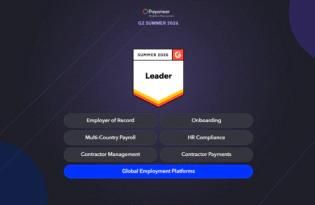
Payoneer Workforce Management named a leader across 12 categories in G2’s Summer 2026 reports
In G2’s Summer 2026 Reports, Payoneer Workforce Management earned leadership recognition across global workforce categories for its reliable payroll, onboarding, compliance, and Employer of Record solutions.


Planning to hire employees in Bulgaria? Here’s a quick guide
Learn how to hire employees in Bulgaria. Covers contracts, work permits, payroll, leave laws, and how Payoneer Workforce Management supports compliance.
Employment laws in Bulgaria
Learn about labor laws compliance in Bulgaria, including contracts, working hours, statutory rights, termination, notice periods, and severance.

Employment laws in Israel
Learn about employment laws in Israel, from contract terms to working hours, from minimum wage to mandatory benefits. Ensure labor law compliance in Israel.
Leave policy in Israel
Explore the leave policy in Israel covering annual leave, sick leave, maternity, paternity leave, and public holidays. Stay compliant with leave laws in Israel.
Your guide to payroll in Bulgaria
Learn how payroll in Bulgaria works, covering income tax, social security, minimum wage, payslip rules, and how to stay compliant after euro adoption.
Leave policy in Bulgaria
A guide to leave laws in Bulgaria, covering annual leave, public holidays, sick leave, maternity and paternity leave, and statutory leave entitlements.

Employment laws in Austria
Labor laws compliance in Austria explained: contracts, working hours, mandatory benefits, notice periods, severance, and key statutes every employer needs.
Leave policy in Austria
Understand leave laws in Austria covering annual leave, sick pay, maternity, paternity, parental leave, and other statutory entitlements that employers must offer.
Latest articles
-

B2B Payments in India: What You Need to Know About Systems, Gateways and Security
Learn how B2B payments work in India, including payment gateways, electronic payments, security, real-time systems, and enterprise payment solutions.
-

Collecting Payment From Customers: Links, Invoices and Automation
Learn how to collect payments from customers in India using payment links, invoices, and automation. Discover secure, fast, and scalable ways to get paid online.
-

Accounts Receivable Explained: The Processes, Tools and Best Practices You Need to Know
Learn how accounts receivable works, including process flow, tools, and best practices. Discover how Indian businesses can automate AR and improve cash flow.
-

Payment Gateways: How to Add One to Your Website
Learn how to add a payment gateway to your website in India. Step-by-step setup for WordPress, PHP, and Wix, plus tips for secure and scalable online payments.
-

How to Accept Payments Online in India (With or Without a Website)
Learn how to accept payments online in India with or without a website. Explore simple setup options, payment methods, and tools for freelancers and businesses.
-

What Are Global Payments and How Do Businesses Collect Money Internationally?
Learn what global payments are and how businesses in India collect money internationally. Explore B2B payment methods, global platforms, and best practices for cross-border growth.
Disclaimer
The information in this article/on this page is intended for marketing and informational purposes only and does not constitute legal, financial, tax, or professional advice in any context. Payoneer and Payoneer Workforce Management are not liable for the accuracy, completeness or reliability of the information provided herein. Any opinions expressed are those of the individual author and may not reflect the views of Payoneer or Payoneer Workforce Management. All representations and warranties regarding the information presented are disclaimed. The information in this article/on this page reflects the details available at the time of publication. For the most up-to-date information, please consult a Payoneer and/or Payoneer Workforce Management representative or account executive.
Availability of cards and other products is subject to customer’s eligibility. Not all products are available in all jurisdictions in the same manner. Nothing herein should be understood as solicitation outside the jurisdiction where Payoneer Inc. or its affiliates is licensed to engage in payment services, unless permitted by applicable laws. Depending on or your eligibility, you may be offered the Corporate Purchasing Mastercard, issued by First Century Bank, N.A., under a license by Mastercard® and provided to you by Payoneer Inc., or the Payoneer Business Premium Debit Mastercard®, issued and provided from Ireland by Payoneer Europe Limited under a license by Mastercard®.
Skuad Pte Limited (a Payoneer group company) and its affiliates & subsidiaries provide EoR, AoR, and contractor management services.
