
Why more marketplaces are shifting their focus to us sellers
Global e-commerce is booming and is set to keep growing. Most of the world’s top e-commerce marketplaces are US-based. So it’s no surprise that marketplaces focus on US sellers. Both US-based and non-US-based marketplaces are making the shift. Learn what makes working with US sellers so attractive.


2018 was a big year for global ecommerce. Total retail ecommerce sales worldwide in 2018 reached $2.8 trillion. To put that number in context, that’s on par with the GDP of the United Kingdom, the world’s 5th wealthiest country. These numbers are expected to nearly double by 2021. Out of these total revenues, the world’s top 100 ecommerce marketplace generated $1.86 trillion – 2/3 of the total sales. 59 of these 100 marketplaces are based in the US.
The rise of Chinese ecommerce sellers
For years US-based ecommerce marketplaces focused their efforts on onboarding sellers from China. Amazon, by far the largest, is comprised of about 25% Chinese sellers. Typically, Chinese sellers are at an advantage as many of them have years of exporting experience and they’re able to offer lower prices than other sellers. This is especially true for Chinese manufacturers who can completely bypass the distributors, wholesalers and third-party retailers along the way. Amazon has also made its services more accessible to Chinese sellers by implementing Seller Central in Chinese, hiring Chinese speaking support staff, offering Chinese manufacturers the ability to ship their merchandise directly from China, and more. Marketplaces that specialize in lower-cost items are even more extreme. As one example, 94% of Wish sellers (a marketplace reported to be worth more than Macy’s, J.C. Penny and Sears combined) are Chinese.
A shift in the trend – a renewed focus on us sellers
Recently, however, we’ve been witnessing a shift in interest towards US sellers from both US-based and non-US-based marketplaces. This trend is worth noting for two reasons: 1. Marketplaces should take note as to understand the inherent value of working with US sellers and consider shifting more of their focus to onboarding proven, quality sellers. 2. Sellers should understand why marketplaces are starting to look closer to home for sellers and make sure that they tick all the boxes.
First, let’s explore what makes working with a US seller attractive for marketplaces. There are a few key factors to take note of:
- Perceived quality
- Easier onboarding
- Ease of dealing with a US-based company
- Better customer experience for their end-user
Perceived product quality
This factor might be the most contentious, but it can’t be ignored. When buyers know their goods are coming from China, they perceive the quality to be lower than if it’s sourced locally. While many US sellers are simply third-party retailers for Chinese-made goods, the buyer’s perception is that the good is of a higher quality. What can be said, however, is that US sellers understand the US buyer better. Whenthey choose to source products from China that they’re going to put their name behind, they go through the extra effort to find higher quality suppliers and therefore tend to offer up better products.
Easier onboarding
This factor is the most straightforward. It’s easier for global marketplaces (primarily US and European companies), to onboard US-based companies. Risk and compliance procedures are smoother and the risks of violating KYC or AML requirements are much lower. It’s easier to request documents for verification that don’t require a translator or local risk specialist which cuts down on onboarding time and costs.
Ease of dealing with a us-based company
Communication is easier when cultures are similar and languages are shared. These factors generally don’t exist when it comes to Western marketplaces dealing with Chinese sellers. US-based sellers are easier to communicate with and this is a big pull for marketplaces for a host of reasons. As mentioned before, Amazon needed to completely localize its seller platform and build up a local presence in the region to succeed in China.
Better customer experience for the end-user
US-based sellers are traditionally quite experienced and have very tight operations based on years of experiences learning what works and what doesn’t work. While they can’t always differentiate on price (especially against their Chinese counterparts), they can (and do!) differentiate when it comes to top notch service. In line with the point above, localization goes a long way when it comes to offering a good customer experience. Those with local operations are known to offer much better customer service – mainly because they’re more easily able to support customer inquiries, returns, etc., in English. Having sellers that offer great customer service (e.g., responsiveness, sensitivity) provides the marketplace with a better reputation for offering a better overall service.
Good news for marketplaces
A few key things we’ve been observing translate into good news for marketplaces eager to onboard proven and experienced US-based sellers. Sellers attitudes are shifting and today and they’re more prepared than ever to look beyond selling on Amazon. Unlike their Chinese competitors, US sellers are often not used to handling the product – they don’t have warehouses like sellers in China have. The main considerations for US-based sellers to move volume over to other marketplaces are a need for similar logistics and comforts that they’ve become accustomed to from Amazon. Sellers in the US understand that they need to be more on more marketplaces to attract a larger audience and scale their business. They’re aware of the growing pains and eager to learn more from the marketplaces themselves on how they can succeed outside of Amazon.
How do we help?
Beyond offering seamless global payments, Payoneer nurtures and leverages our ecosystem of over 4M users to bring marketplaces closer to sellers and sellers closer to marketplaces. Payoneer is the only payments provider that goes that extra mile by hosting forums, meetups, VIP events, webinars and more, allowing marketplaces to get valued one-on-one time with targeted key sellers in desired regions. At the same time, these efforts enable sellers to break through the corporate barriers that traditionally exist and interface directly with the marketplace. Our efforts provide a win-win for all.
Sources: Shopify, 2018, The Global Ecommerce Playbook, Digital Commerce 360,2018, Top Online Marketplaces in 2018, Marketplace Pulse, The Atlantic
Related resources

What Is Remittance? A Simple Guide for Indian Freelancers and Professionals
Remittance means transferring money across borders. If you receive payments from international clients or have family abroad sending money home, here is what you need to know.


Top Online Payment Systems and Ecommerce Payment Methods in India
Explore the top online payment systems for e-commerce businesses in India. Learn how to accept payments securely and efficiently with Payoneer's global solutions.
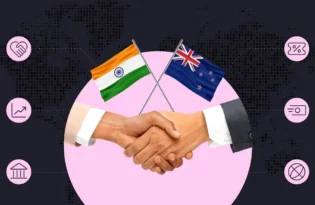
India–New Zealand FTA 2026: What Every Indian Exporter Needs to Know Right Now
India–New Zealand free trade agreement (FTA) provides duty-free access across all tariff lines for Indian exports. Here's what exporters need to know before it enters into force.

Stripe vs Payoneer in India: Everything You Need to Make Your Choice
Explore the key differences between Stripe and Payoneer in India to determine which payment platform best suits your business needs.

India’s Top 10 B2B Payment Gateways
Explore the top 10 B2B payment gateways in India. Compare features, fees, security, and integration options to choose the best payment solution for your business.

Razorpay vs. Payoneer in India: Everything You Need to Know
Compare Razorpay and Payoneer for online payments in India. Explore features, pricing, global reach, and which is better for freelancers and small businesses.

Best Payment Solutions for Freelancers and Contractors in India
Explore the best ways for freelancers and contractors in India to get paid. Learn how to request payments, withdraw funds, and manage payments with Payoneer.

How to Open a Business Bank Account Online in India: A Complete Guide
Opening a business bank account in India? Learn the full process, required documents, and the best online banking options for small businesses and LLCs.
Discover how much you can save with Payoneer Checkout
Compare potential checkout savings fees between Payoneer, PayPal, and Stripe . Excludes gateway and chargeback fees
Latest articles
-

Payoneer Workforce Management named a leader across 12 categories in G2’s Summer 2026 reports
In G2’s Summer 2026 Reports, Payoneer Workforce Management earned leadership recognition across global workforce categories for its reliable payroll, onboarding, compliance, and Employer of Record solutions.
-
What Is Remittance? A Simple Guide for Indian Freelancers and Professionals
Remittance means transferring money across borders. If you receive payments from international clients or have family abroad sending money home, here is what you need to know.
-
Top Online Payment Systems and Ecommerce Payment Methods in India
Explore the top online payment systems for e-commerce businesses in India. Learn how to accept payments securely and efficiently with Payoneer’s global solutions.
-
Planning to hire employees in Bulgaria? Here’s a quick guide
Learn how to hire employees in Bulgaria. Covers contracts, work permits, payroll, leave laws, and how Payoneer Workforce Management supports compliance.
-
Employment laws in Bulgaria
Learn about labor laws compliance in Bulgaria, including contracts, working hours, statutory rights, termination, notice periods, and severance.
-
Employment laws in Israel
Learn about employment laws in Israel, from contract terms to working hours, from minimum wage to mandatory benefits. Ensure labor law compliance in Israel.





Disclaimer
The information in this article/on this page is intended for marketing and informational purposes only and does not constitute legal, financial, tax, or professional advice in any context. Payoneer and Payoneer Workforce Management are not liable for the accuracy, completeness or reliability of the information provided herein. Any opinions expressed are those of the individual author and may not reflect the views of Payoneer or Payoneer Workforce Management. All representations and warranties regarding the information presented are disclaimed. The information in this article/on this page reflects the details available at the time of publication. For the most up-to-date information, please consult a Payoneer and/or Payoneer Workforce Management representative or account executive.
Availability of cards and other products is subject to customer’s eligibility. Not all products are available in all jurisdictions in the same manner. Nothing herein should be understood as solicitation outside the jurisdiction where Payoneer Inc. or its affiliates is licensed to engage in payment services, unless permitted by applicable laws. Depending on or your eligibility, you may be offered the Corporate Purchasing Mastercard, issued by First Century Bank, N.A., under a license by Mastercard® and provided to you by Payoneer Inc., or the Payoneer Business Premium Debit Mastercard®, issued and provided from Ireland by Payoneer Europe Limited under a license by Mastercard®.
Skuad Pte Limited (a Payoneer group company) and its affiliates & subsidiaries provide EoR, AoR, and contractor management services.
